Serving Sunrise, FL & nearby
(954) 459-3860
Sunrise, FL

Older Doors in a Town That Grew Fast

In Sunrise, FL, most garage doors date to the 1962-2005 building boom, before insulation rules caught up with South Florida's mild, humid climate.

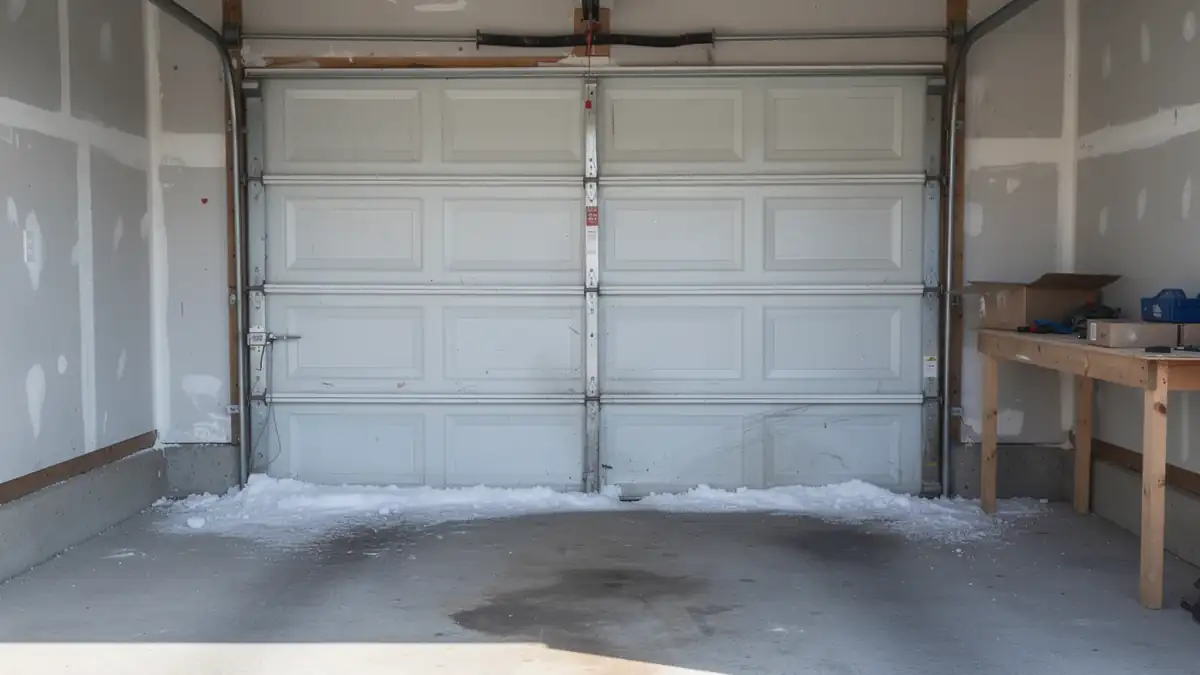
A white garage door is closed with snow and water on the floor.

What to Look At First

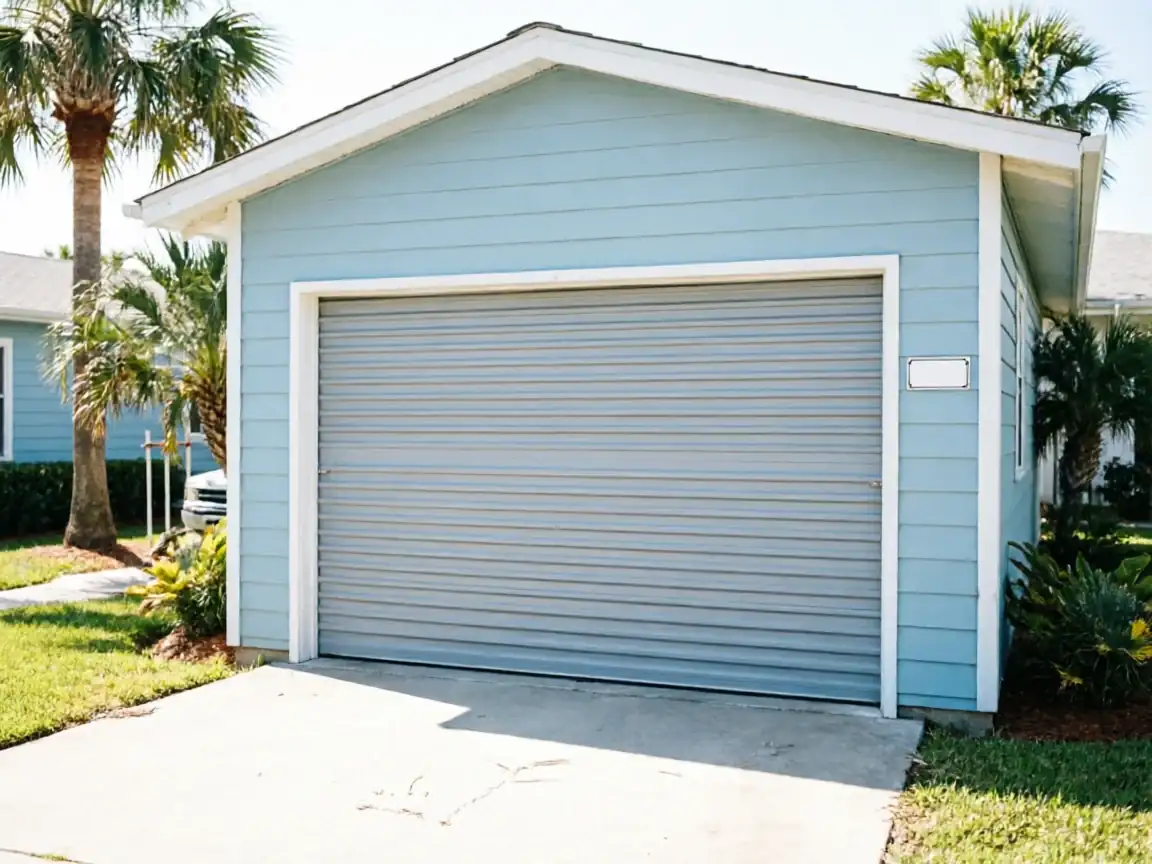
Most of Sunrise went up between 1962 and 2005, with the median house dating to 1976. That's the era before garage door insulation standards were common in new construction here, so a lot of single-skin steel or aluminum doors are still hanging on their original tracks. If your house falls in that 1960s-70s band that covers most of the 25 named areas in this part of Broward, start by looking at the panel itself. Press on it. If it flexes under your palm, it's a single layer of metal with nothing behind it - no foam, no vapor barrier, no second skin. That's not a defect. That's just what builders put up before anyone worried about R-value on a garage door. Check the bottom panel next, since it takes the most weather and the most contact with the slab. Rust bubbling along the bottom edge or a warped bottom seal are the two things that tell you the door has been doing its job uninsulated for forty-plus years and is starting to show it. None of this means the door is unsafe. It means you're due for an honest look at whether it's worth insulating or replacing outright.

What the Weather Here Does to It

Sunrise sits in a mild temperate band - no hard freezes, no heavy snow load to worry about structurally. That's good news for springs and openers, which don't fight winter contraction the way they do up north. But mild doesn't mean gentle. Humidity here runs high most of the year, and an uninsulated 1970s-era steel door has no vapor barrier to stop moisture from condensing on the inside face. Over decades that shows up as rust starting from the inside out, often on the bottom two panels before you ever see it from the driveway. Heat is the other factor. A single-skin door with nothing behind it transmits outside temperature straight into the garage, which matters if you've got a freezer, a workbench, or ductwork running through there. None of this is dramatic weather damage like you'd get from hail or a hard freeze. It's slow - rust creep, seal softening, panel fatigue from decades of expansion and contraction in a hot, wet climate. That's the trade-off of a mild climate: nothing breaks all at once, but nothing gets a break either.

The Situation

Across this service area there are roughly 76,302 owner-occupied houses out of about 300,344 households, and a lot of them share the same build era - 1960s and 70s stock, median income around $63,423. That combination matters: plenty of houses old enough to have original, uninsulated doors, and a household budget that makes full replacement a real decision rather than an automatic one. We get calls from Tamarac, Lauderhill, and Lauderdale Lakes - all within a few miles - with the same door, different street. The honest situation is that a door built before insulation rules isn't inherently broken. It's just doing a 1976 job in a house that may now have central air, insulated walls, and a homeowner who notices the garage is the hottest room on the block. Whether that's worth fixing depends on what else is going on with the door - track wear, spring age, opener condition - not just the insulation gap on its own.

Doing Nothing For Now

Here's the limitation, plainly: we don't insulate a door as a standalone fix if the panels themselves are cracked, badly rusted, or the track is out of square. Retrofitting insulation kits onto a door that's already failing structurally is money that doesn't hold up. If the door is sound - no rust-through, tracks straight, rollers turning freely - adding insulation is a reasonable, lower-cost step that can wait until it's convenient. If the door is older stock from the 1962-2005 wave and showing real wear, insulation isn't the fix; replacement is. Doing nothing for now is a legitimate choice if the door still seals, still balances, and still opens without strain. It's not a legitimate choice if you're already seeing daylight at the bottom seal or hearing the opener strain against a heavier-than-it-should-be panel. Know which situation you're in before you decide to wait.

How it works

From “it’s stuck” to “it’s fixed”

A man stands in a driveway looking at his phone in front of a white garage door.

Tell us what’s wrong

Describe the symptom - won’t open, loud bang, opener runs but the door won’t move.

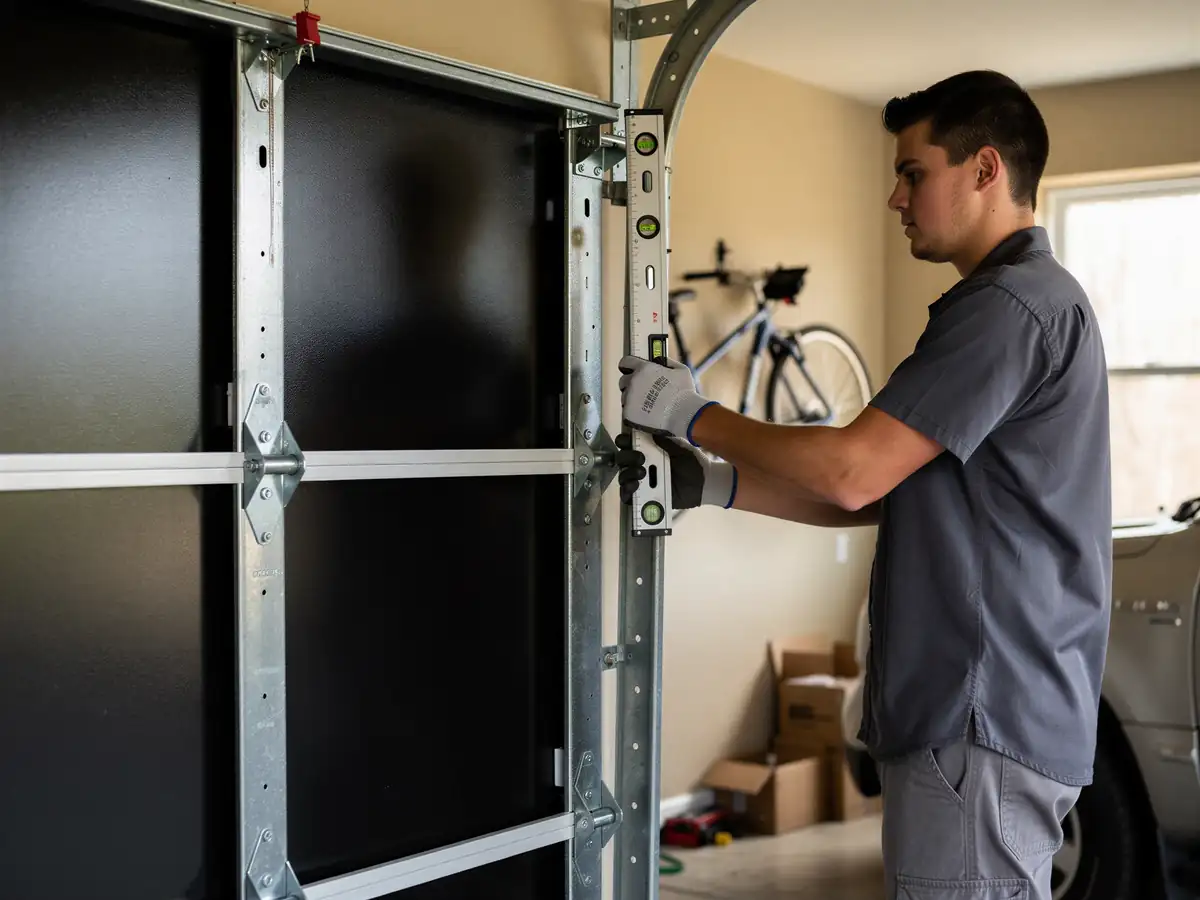
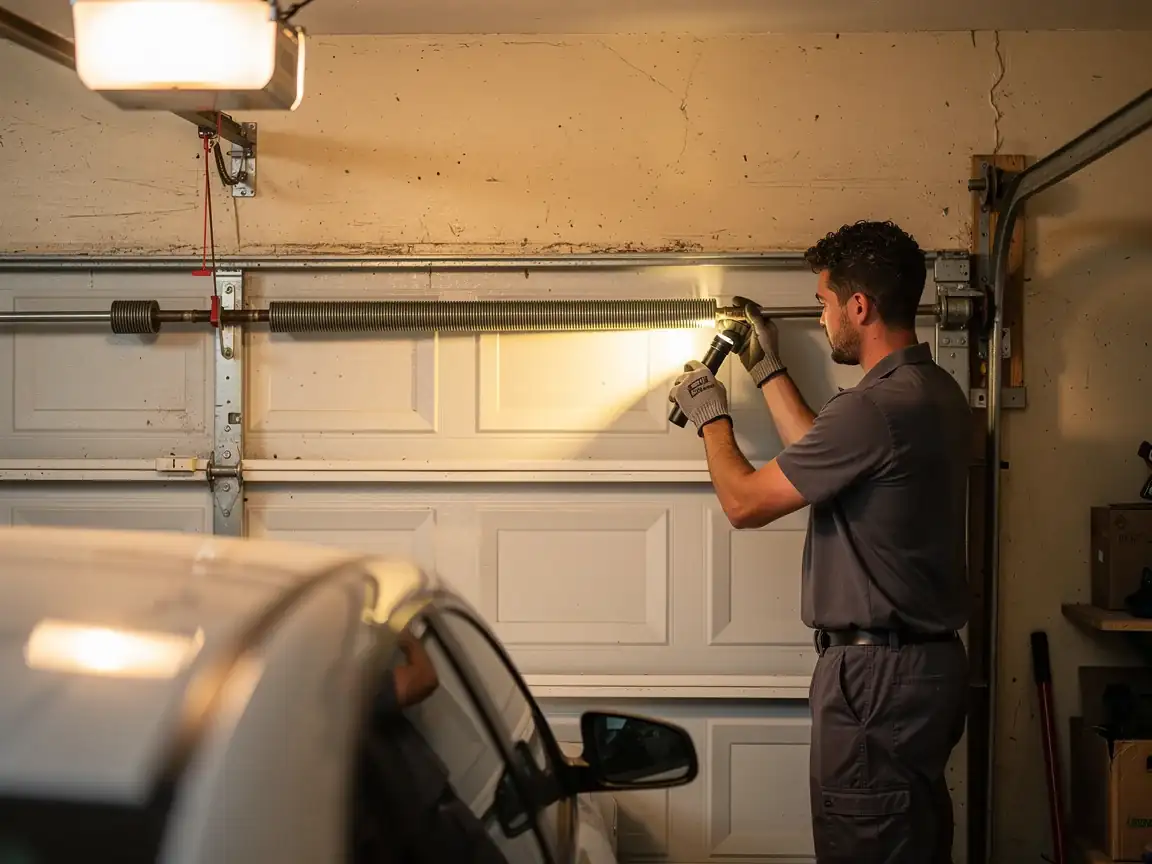
A technician inspects a garage door torsion spring with a flashlight.

On-site diagnosis

A technician tests the door under power and by hand and finds what actually failed.

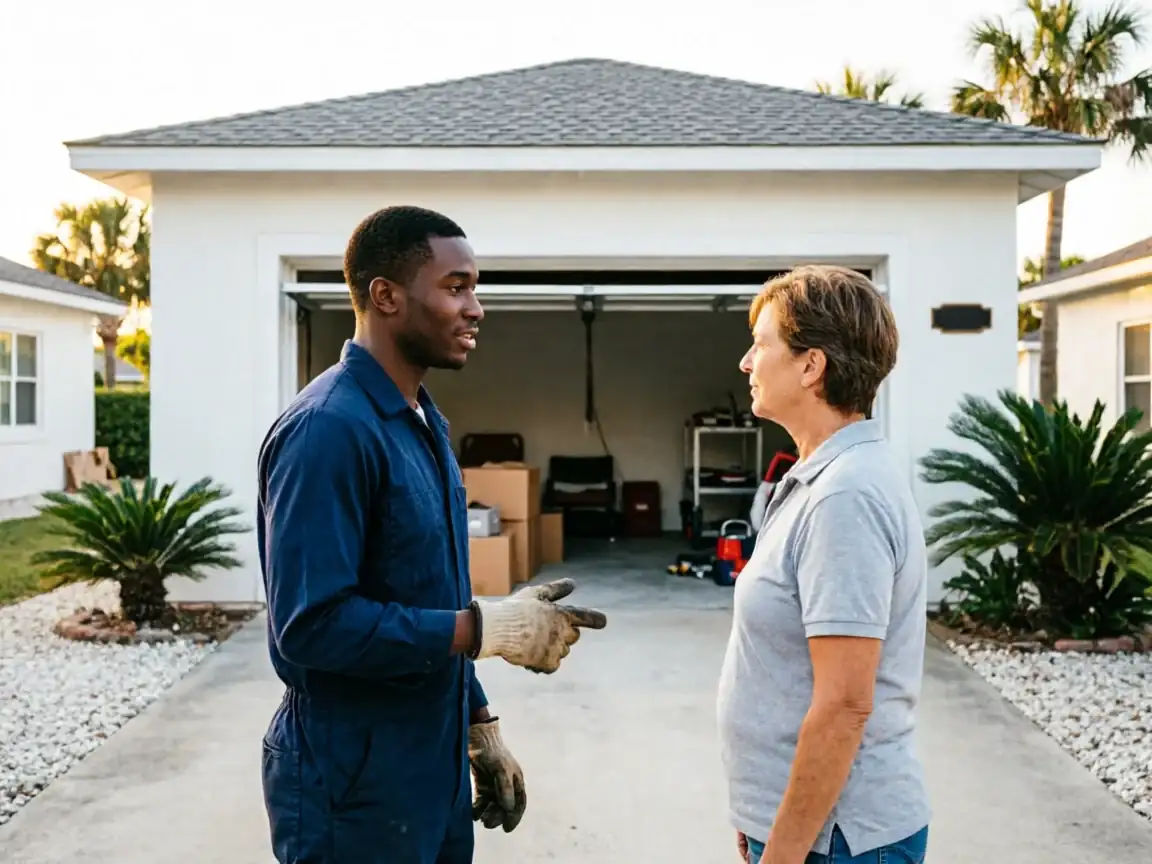
A technician in a blue jumpsuit talks to a woman in front of a garage.

Clear, up-front plan

You get the fix that’s needed and what drives the cost - before any work starts.

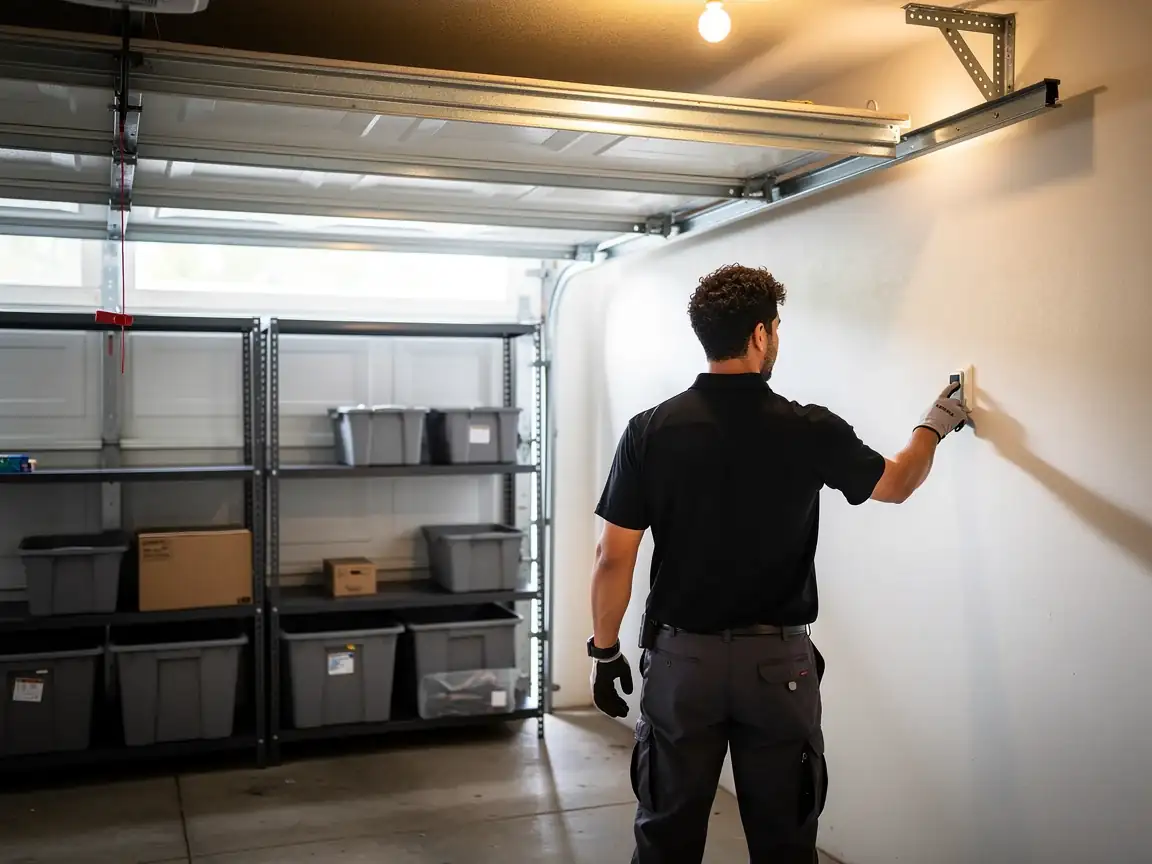
A technician in a black shirt and gloves adjusts a white wall control.

Repaired & tested

The repair is done, the door is set true and tested, and the work area left clean.

Not sure which repair your door needs in Sunrise, FL? Describe what it’s doing - every job starts with a diagnosis.

How we work

What to expect

Diagnosis firstEvery visit starts by finding what actually failed - not a pre-written parts list.
The right part for the doorSprings and openers matched to the door’s weight and age, so the fix holds up.
Straight answersWhen a repair makes more sense than a replacement - or the reverse - you hear it plainly.
Clean, careful workTension released safely, hardware set true, the door tested under power before we leave.
What we do

Garage Door Services

Repair and installation work for Sunrise homes and businesses.

Questions

Frequently asked

Straight answers about garage door repair in Sunrise. Still unsure? Ask us directly.

Does my garage door in Sunrise need insulation if it's from the 1970s?

Not automatically. Plenty of 1970s single-skin doors are still structurally sound - straight track, good rollers, solid panels. Insulation helps with heat transfer and condensation, but it's worth doing only if the door itself is in good shape. If the panels are rusted or warped, insulating isn't the fix.

Why does my older door sweat on the inside?

That's condensation, common on uninsulated steel doors in a humid climate like this one. Without a vapor barrier, the inside face of the panel cools faster than the air around it and moisture collects. It's a known issue with pre-insulation-era doors, not a sign of a leak or a broken seal.

Is it cheaper to insulate an old door or replace it?

Depends on the door's condition. If the panels and track are sound, a retrofit kit is the lower-cost route. If there's rust-through or warping, you're paying to insulate a door that needs replacing anyway, so full replacement usually makes more sense long-term.

Ready to get your garage door sorted?

Tell us what it’s doing and where you are in Sunrise - we’ll take it from there.

Request a QuoteCall