What to Look At First
Start with the spring itself, not the opener
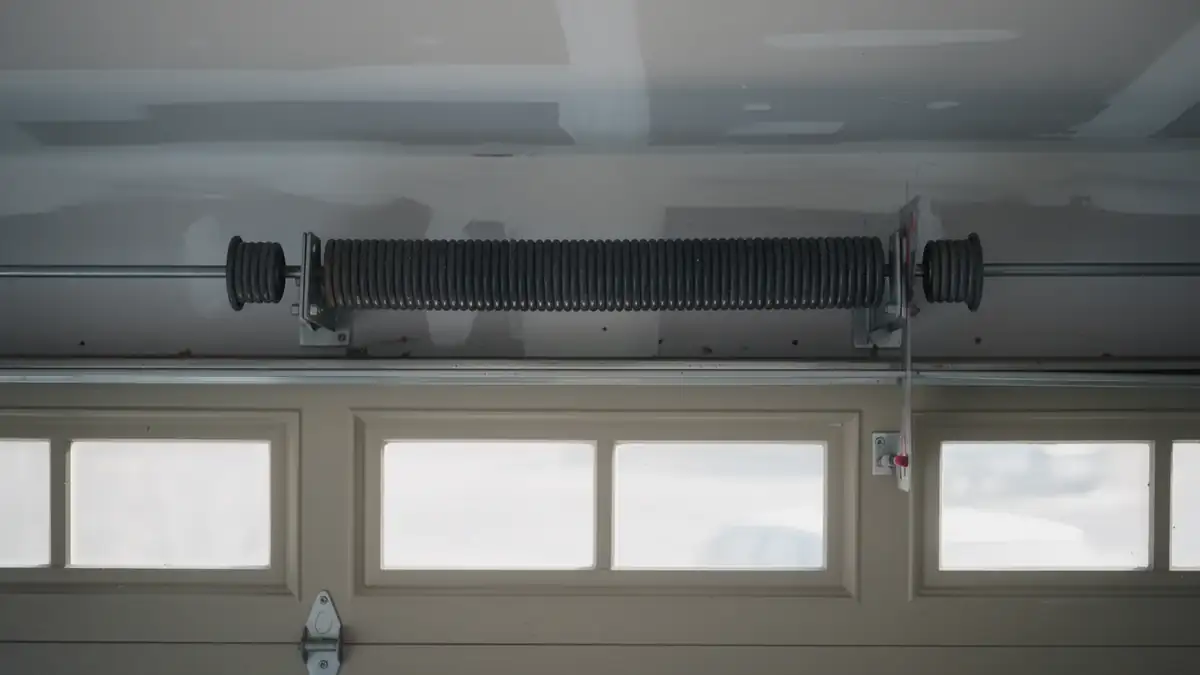
Most houses in Sunrise went up between 1962 and 2005, with the median build year sitting around 1976, so a lot of the torsion springs still on these doors are original or close to it. That's close to fifty years of cycling on one coil of wound steel. Look for a gap in the coil, a flat section that looks pinched, or rust streaking down from the winding cone onto the shaft. If the door feels heavier than it used to, or it won't stay put halfway up when you pull the release, the spring is carrying less of the load than it should.
Check the cable drums too
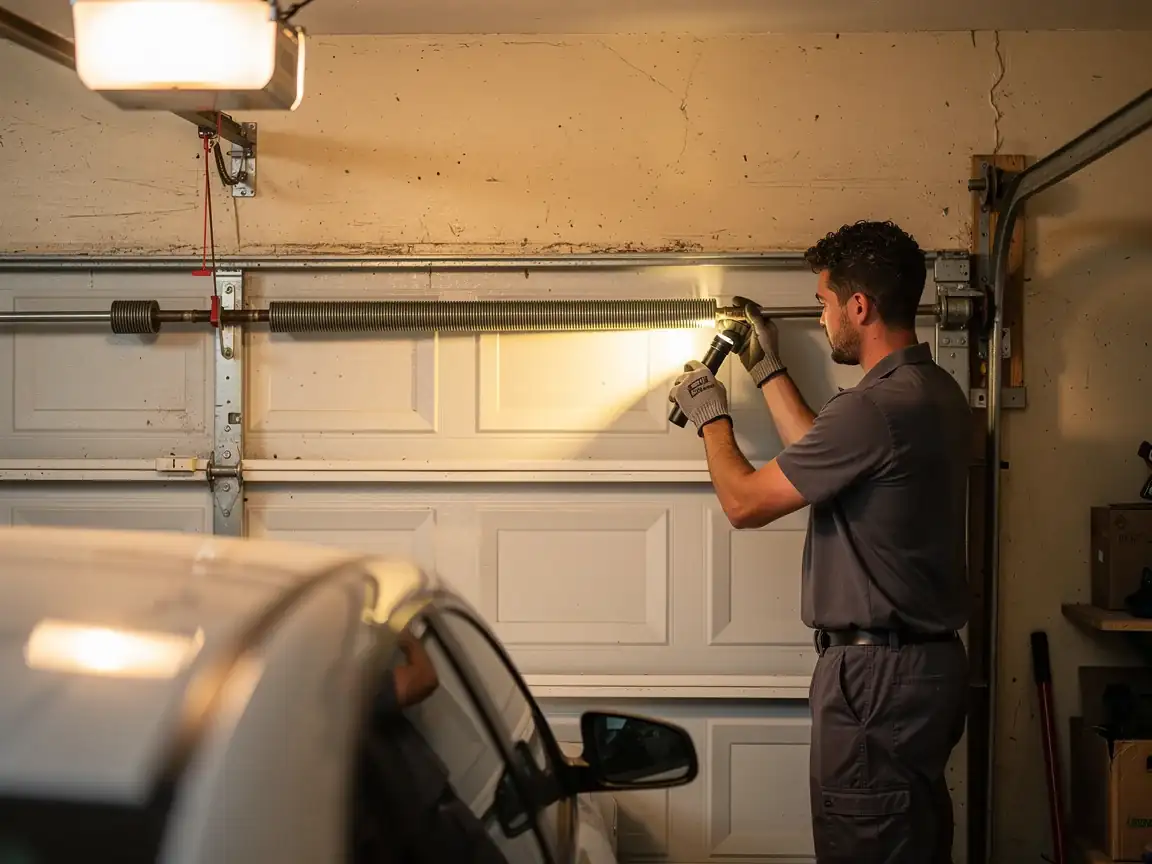
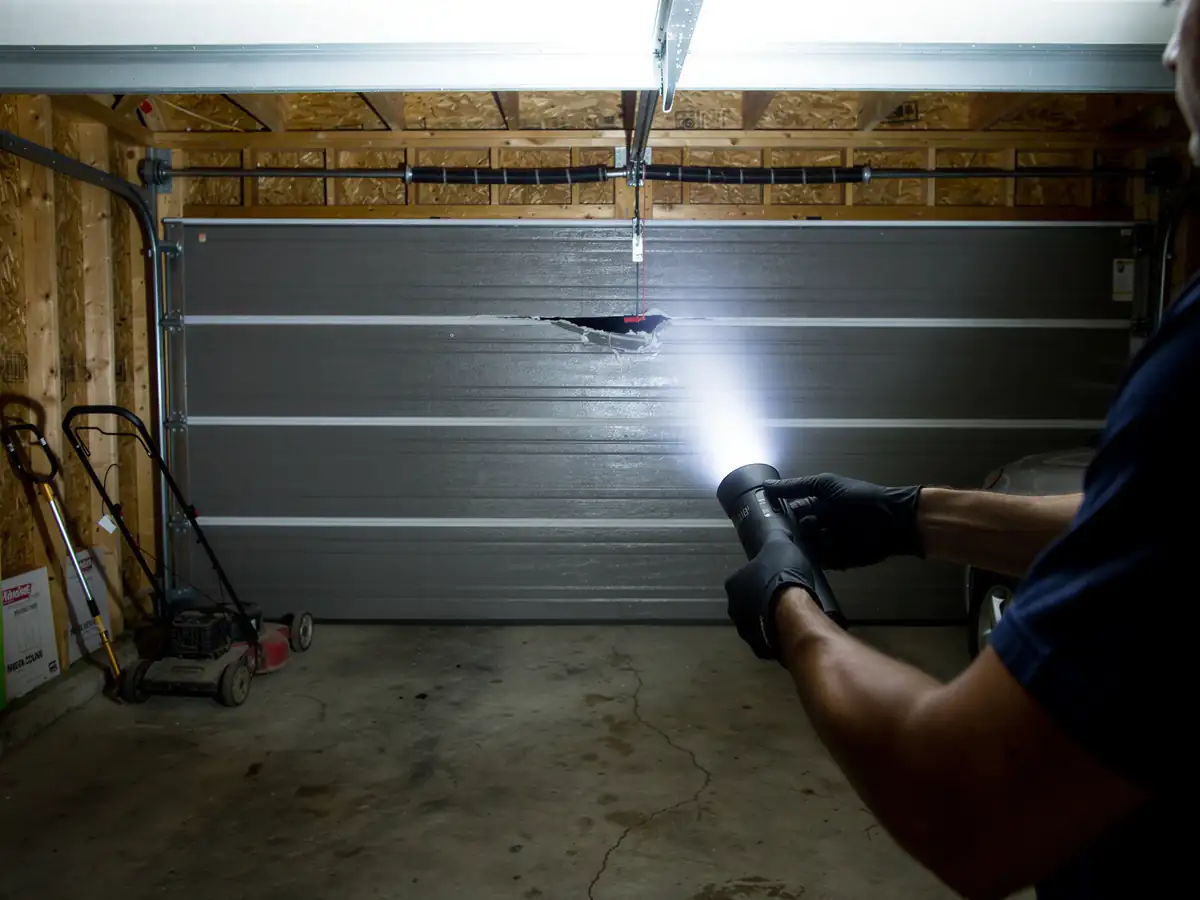
On doors this old, the cable groove can wear a groove of its own, and that wear usually shows up around the same time the spring starts going. Don't try to wind or unwind a torsion spring yourself - the bar is under real tension and it's not a job for a wrench and a free afternoon. If you can get a flashlight on the spring and see daylight through a gap in the coil, that's your answer, and it's time to call someone before it answers for you.
What the Weather Here Does to It
Sunrise sits in a mild temperate band, so the spring in your garage almost never sees the kind of deep freeze that snaps steel outright the way it might up north. That's the good news. The bad news is humidity does slower, quieter damage - years of damp air sitting in a closed garage work rust into the coil from the inside out, and rust is what turns a spring from flexible to brittle.
Then, once or twice a winter, a cold front comes through and temps drop faster than the metal is used to. A healthy spring shrugs that off. A spring that's already thinned by corrosion doesn't have the give left, and that sudden contraction is often the thing that finally breaks it - not the cold itself, but the cold hitting metal that was already compromised. If your spring has been quietly rusting for a decade, a cold snap isn't the cause of the failure. It's just the day it happens.
The Situation
Across the roughly 76,302 owner-occupied houses in this service area, a big share are sitting on the same mid-1970s hardware - same era of torsion spring, same era of track and roller, installed back when one-piece and sectional steel doors were both common. That means when one spring goes on a street like this, it's rarely a one-off. It's the hardware reaching the end of a run that started decades ago.
Median household income here runs around $63,423, and that number matters for the decision in front of you. A single spring replacement on a door that's otherwise sound is a straightforward repair. A door where the spring, the drums, and the rollers are all original and all showing the same wear is a different conversation - one where patching one part just means the next part fails in a few months. We'll tell you straight which situation you're in before we quote anything.
Doing Nothing For Now
If the spring looks fine today
No visible gap, no rust bloom, door still balances evenly when you lift it by hand with the opener disconnected - there's no reason to force a repair you don't need yet. That's the honest limit here: we can't tell you a spring is about to fail from a description over the phone, and we won't push a replacement on hardware that's still doing its job.
What we'd watch for, on a house from this era, is the door starting to drift down on its own
Or the opener straining and making a new noise it didn't make last month. Those are the signs that the spring has already lost tension and is on borrowed time. Waiting past that point usually means the spring lets go while the door is open, which is a heavier and more sudden failure than most owners expect. If you're anywhere from Tamarac to Lauderhill to the rest of this service area and you're not sure which category your door is in, that's worth a look before, not after.