What to Look At First
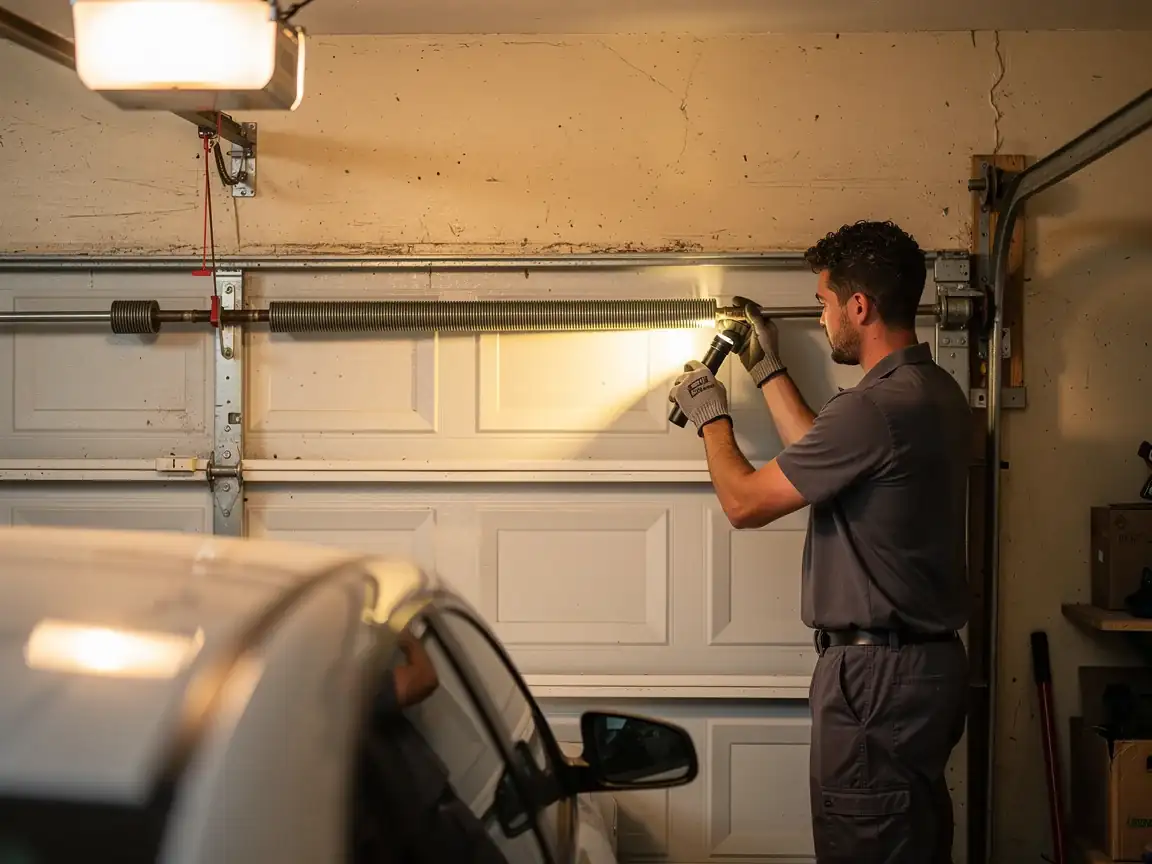
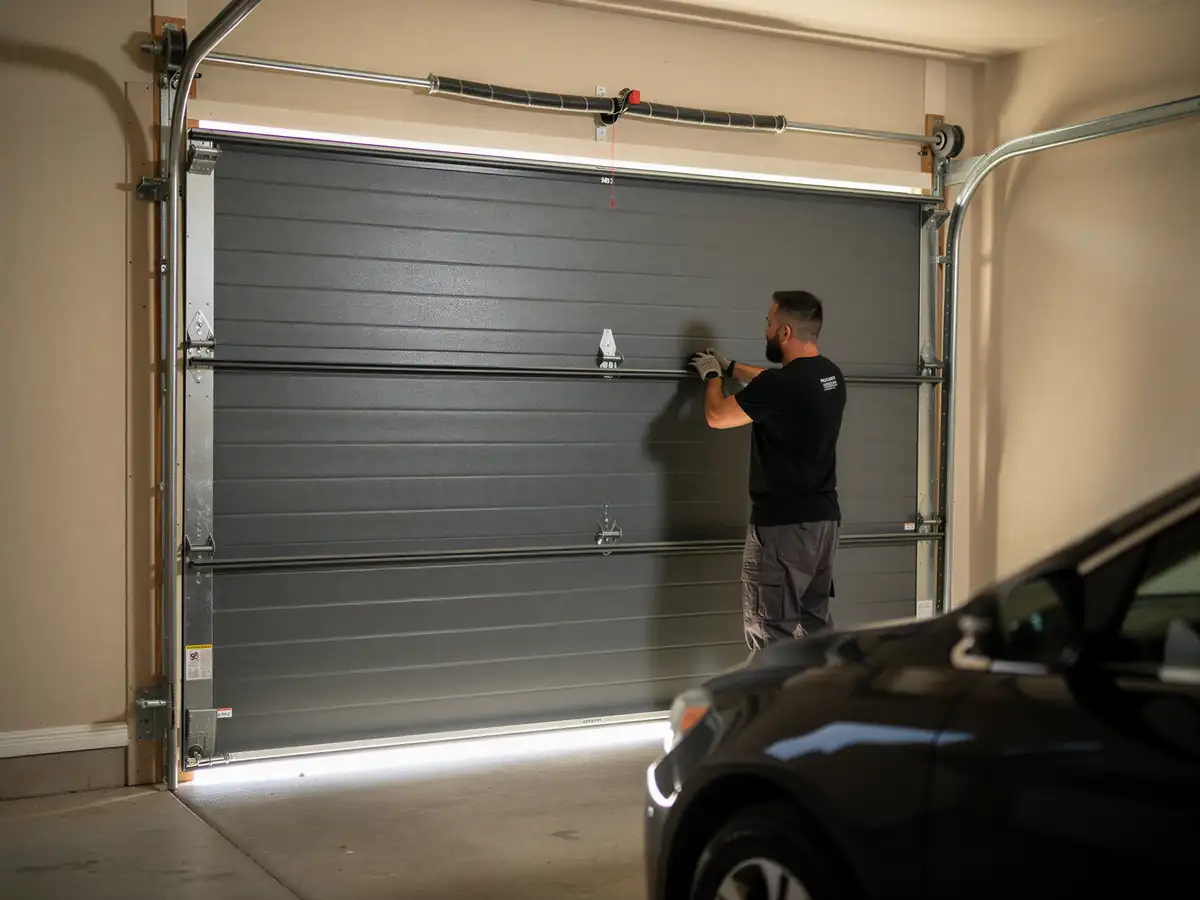
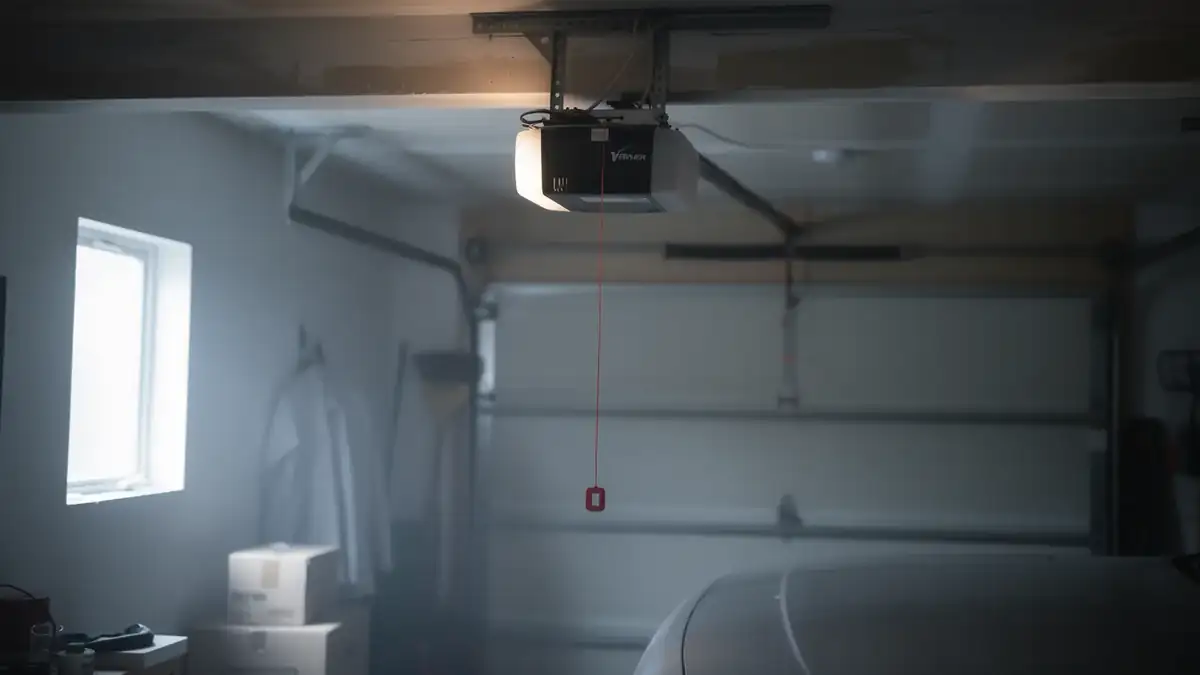
Start with the manual release cord - the red handle hanging from the track near the motor head
If you've never pulled it, find it now, before you need it in the dark. Most houses in this part of Broward went up between 1962 and 2005, with the median landing around 1976, which means the opener bolted to your ceiling is almost never the original. It's the second or third one someone installed since, and each swap brought a different brand, a different release mechanism, and sometimes a different mounting point.
Check the label on the motor housing for a model number and a manufacture date if there is one
Chain-drive units from the 80s and 90s don't have battery backup at all - if the power drops, that door is staying put until you release it by hand. Newer units, especially anything installed in the last decade, usually carry a battery that kicks in automatically. Look for a small black box near the head unit; if it's not there, you don't have backup power.
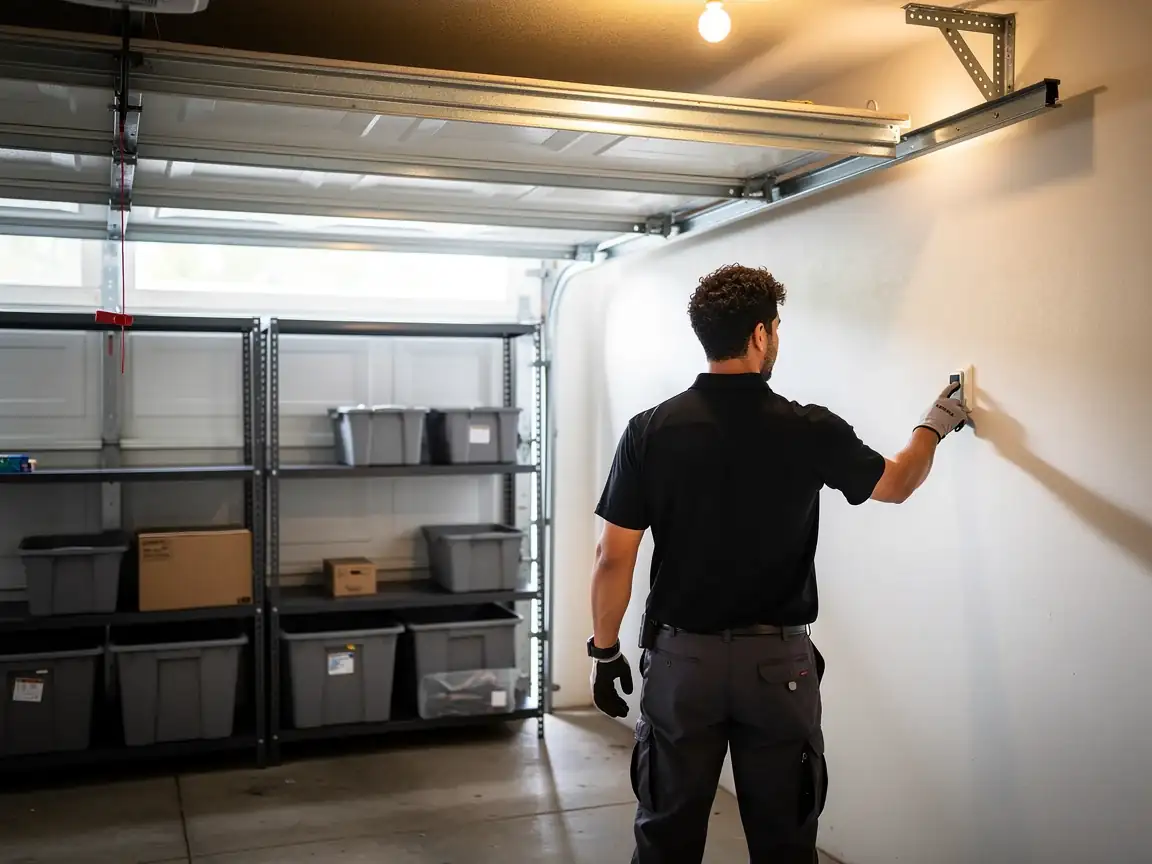
Also look at the wall button and the keypad
Faded buttons or a keypad that only works if you mash it twice usually means moisture has gotten into the contacts, which is a separate problem from the motor itself but gets blamed on the opener every time.
What the Weather Here Does to It
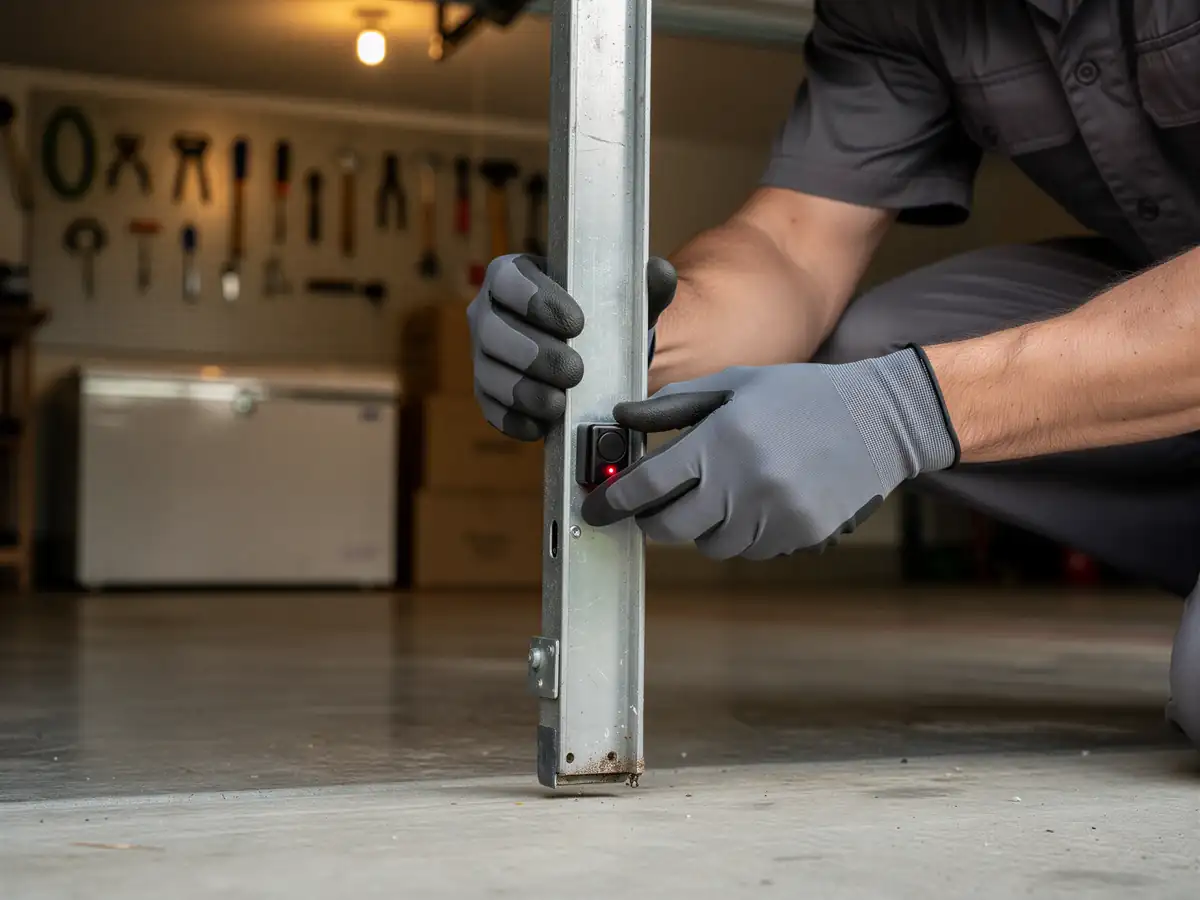
Sunrise sits in a mild temperate band - no hard freezes, no ice locking up tracks, none of the cold-snap failures that openers see further north. That's the good news. The bad news is what mild-and-humid does instead: it corrodes. Circuit boards inside the motor housing, the photo-eye sensors at the bottom of the track, and the wiring connectors all sit in a near-constant low level of moisture most of the year, and that slowly eats contact points and solder joints.
This shows up as intermittent failures before it shows up as a dead opener - a door that works fine for a week, then won't respond to the remote, then works again after you unplug and replug the unit. People often chase that as a remote problem or a sensor alignment problem when it's really corrosion inside the logic board.
Heat plays a smaller role: a motor housing mounted in a garage that holds afternoon heat will run its capacitors down faster over the years, but that's a slow wear item, not a storm event. There's no freeze-thaw cycle here stressing the hardware the way it would in a colder climate - the failure pattern in Sunrise is steady humidity exposure, not sudden temperature swings.
The Situation
Put the housing age and the climate together and you get a specific, common call: an opener installed sometime in the 80s or 90s, no battery backup, starting to act up from years of humidity exposure, in a house that's never had the unit replaced because the door itself still works fine when you pull the cord. The opener and the door are two different problems, and in this area the opener is usually the older of the two.
With 76,302 owner-occupied houses across the service area and most of that stock dating to around the 1976 median, this isn't a one-house problem - it's a pattern that shows up block by block. The same thing is true just a couple of miles out: Tamarac, Lauderhill, and Lauderdale Lakes sit within two to four miles and carry the same 1960s-70s build era, so the same opener-age issue turns up there too, not just in Sunrise proper.
A power cut on its own isn't usually the emergency people think it is - the manual release gets the door open or closed by hand. The real issue is an opener that's already failing quietly and picks the power outage as the moment it finally won't restart.
Doing Nothing For Now
Here's the honest part
If your opener still responds to the remote, still reverses when something's under the door, and the battery backup kicks in during outages, there's no reason to touch it. An opener that's doing its job doesn't need to be replaced because it's old - plenty of units from the 90s are still running fine in this area.
Where it stops being a wait-and-see situation is if you've got no backup power and no working manual release
Or if the unit is cutting out intermittently the way humidity-corroded boards do. At a median household income of $63,423 across this service area, swapping a whole opener is a real cost decision, not a casual one, so it's worth confirming the actual fault - board corrosion versus a bad sensor versus a worn gear - before replacing the whole head unit.
- $63,423 median household income
We don't troubleshoot this over the phone with any confidence
A corroded board and a misaligned photo-eye look identical from the homeowner's side of things. That one we have to see in person.