Why It Happens Here
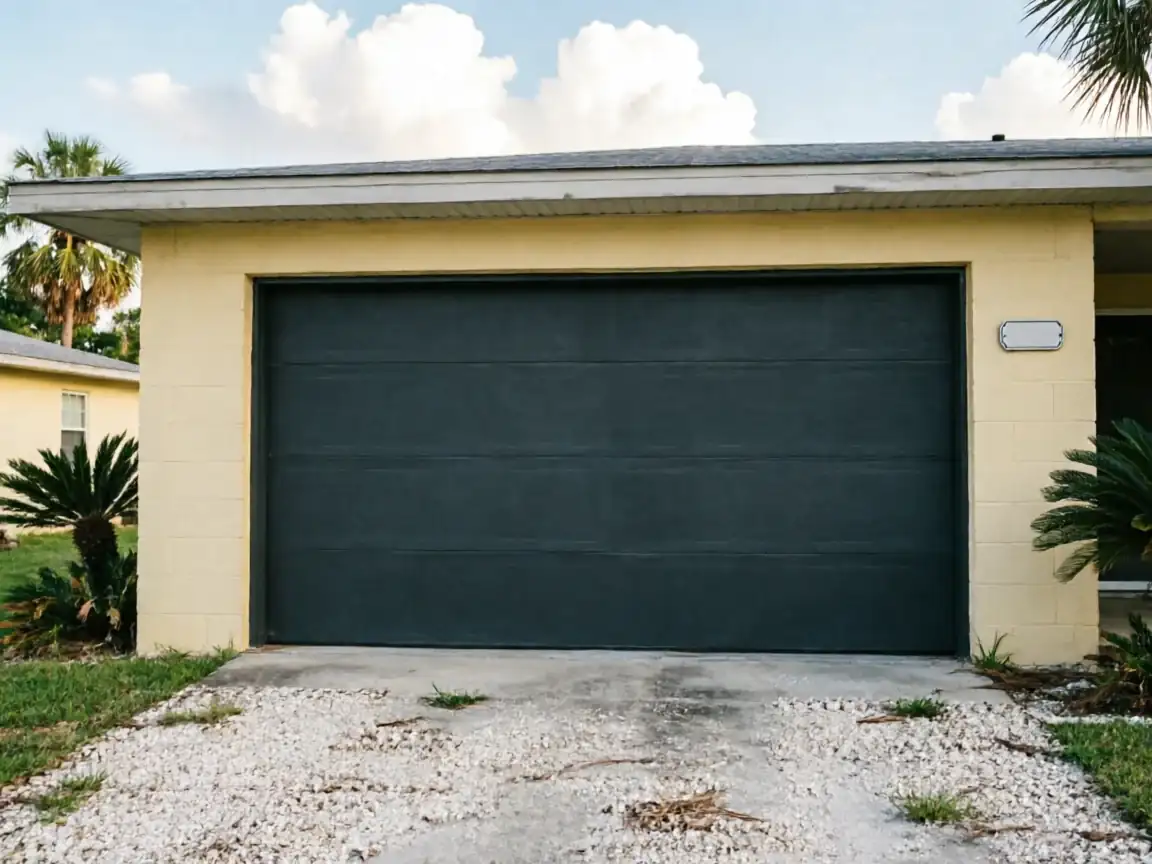
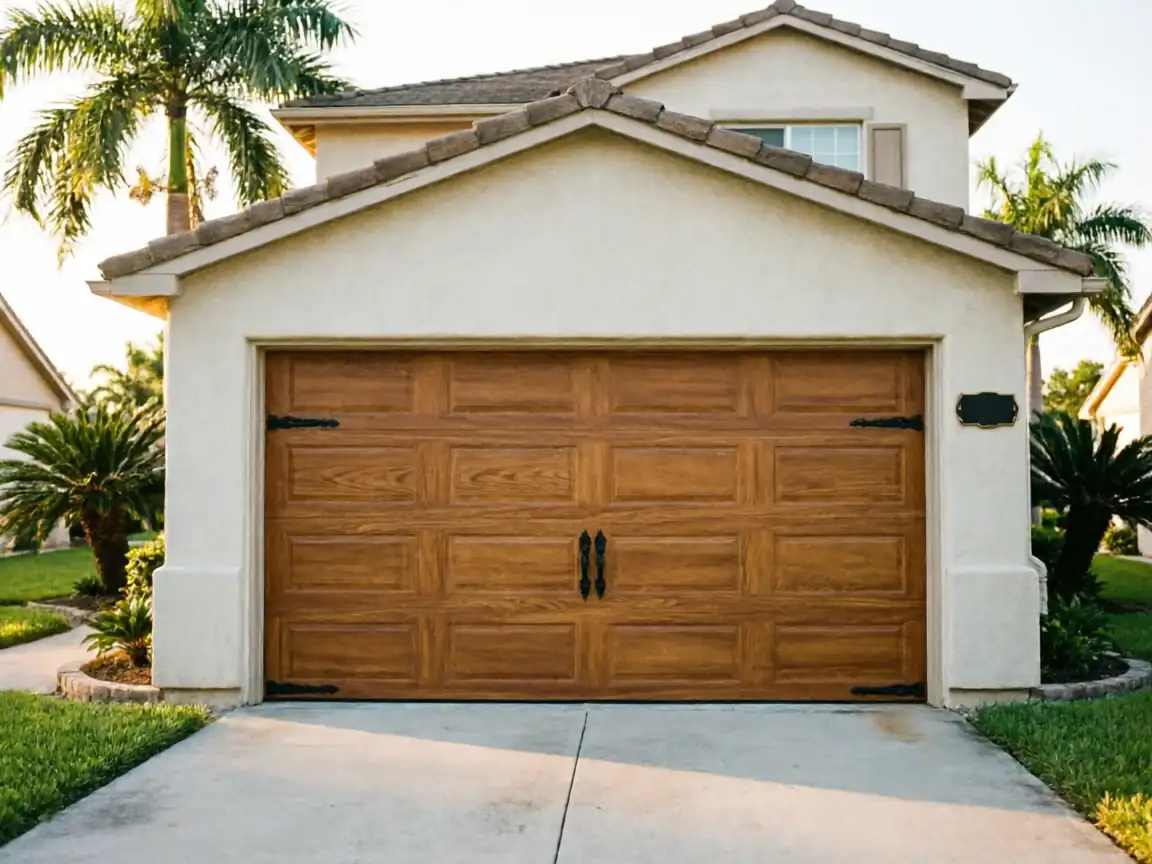
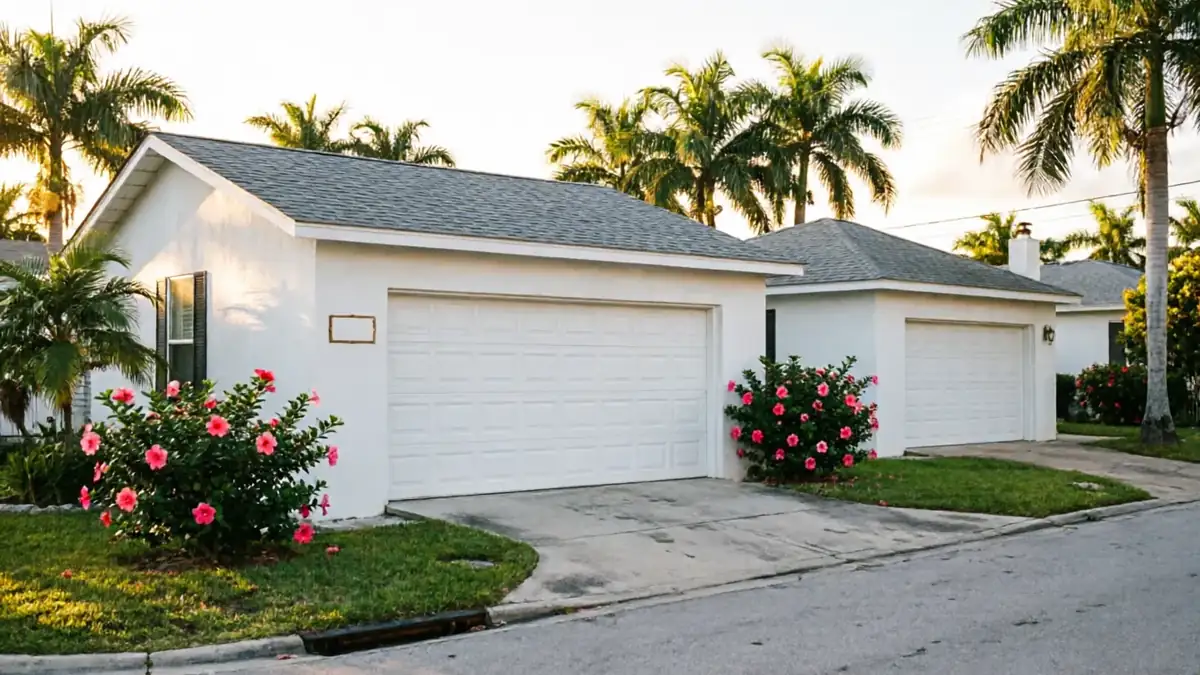
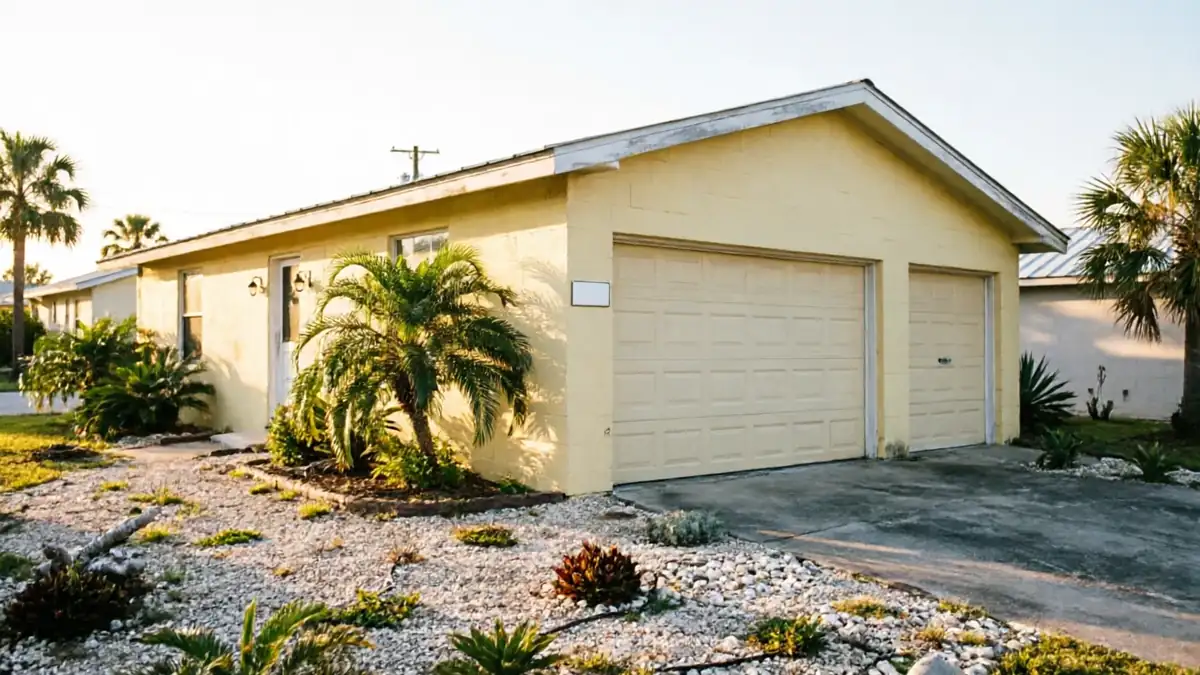
Most of the housing in this service area went up between 1962 and 2005
With the median home dating to around 1976. That means a huge share of the doors out there are running on cables that are decades past their design life, even if nobody's ever touched them. Cable doesn't fail on a schedule - it fails on cycle count and exposure, and a door that's been opened and closed twice a day since the Ford administration has put a lot of miles on that steel.
Across the 25 named areas we work in, the dominant stock is still 1960s-70s construction
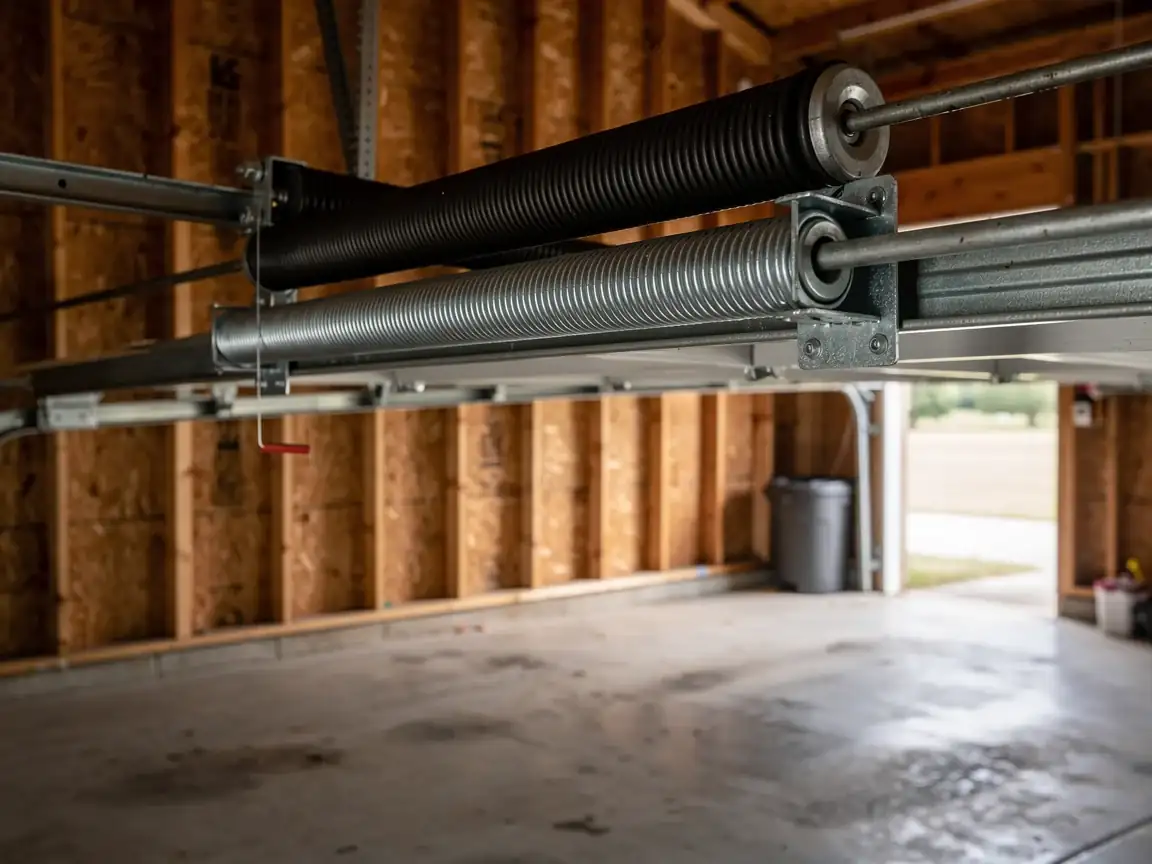
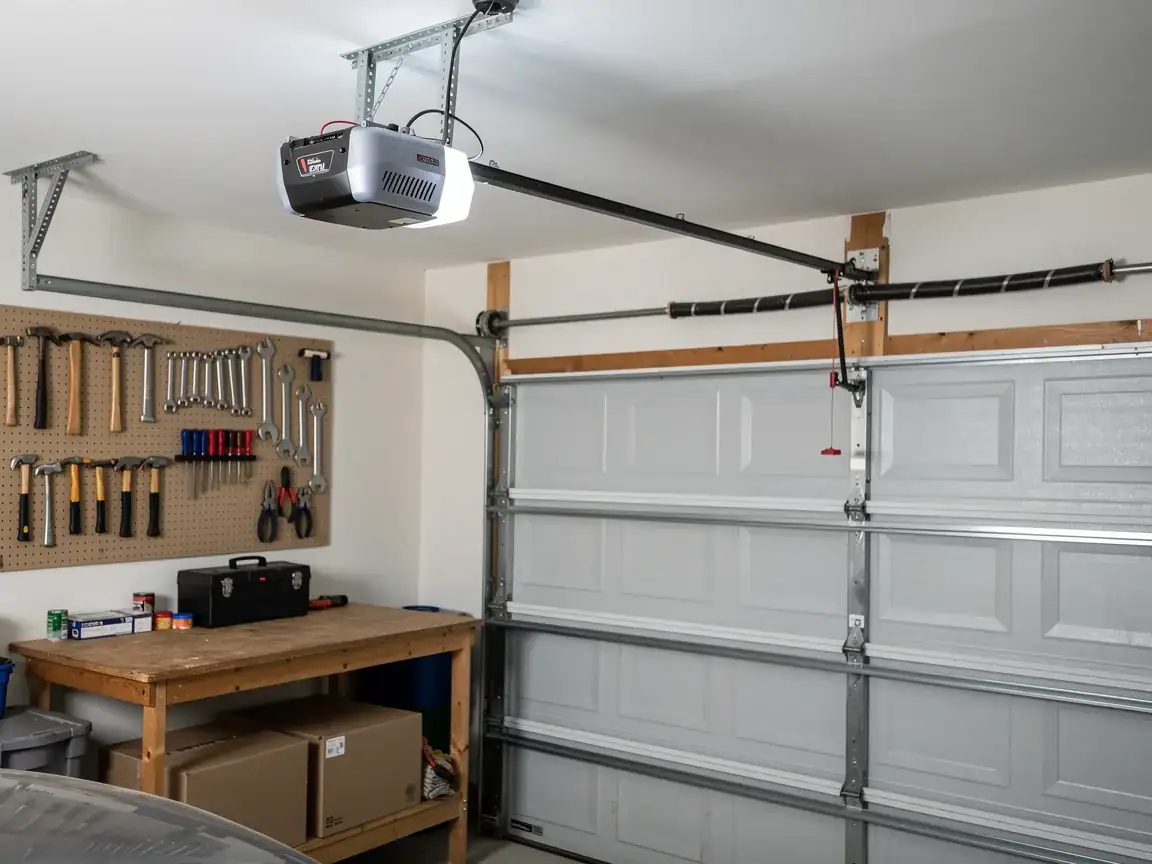
Which usually means the original lift hardware: galvanized aerial cable on a drum or a cone, sized for the door that shipped with the house, not necessarily the heavier insulated door a later owner put in. The mild, temperate climate here doesn't put cables through the freeze-thaw cycling that snaps steel up north, but it doesn't spare them either - years of humidity and temperature swings still work on the galvanizing, and once that coating pits, the strand underneath starts to go. It's a slower failure than a cold-climate snap, but it's just as final when the last strand lets go.
We see this pattern on original doors, on doors that got a heavier replacement panel without a hardware upgrade
And on doors where a spring was replaced years back but the cable wasn't checked at the same time.
What You Are Seeing
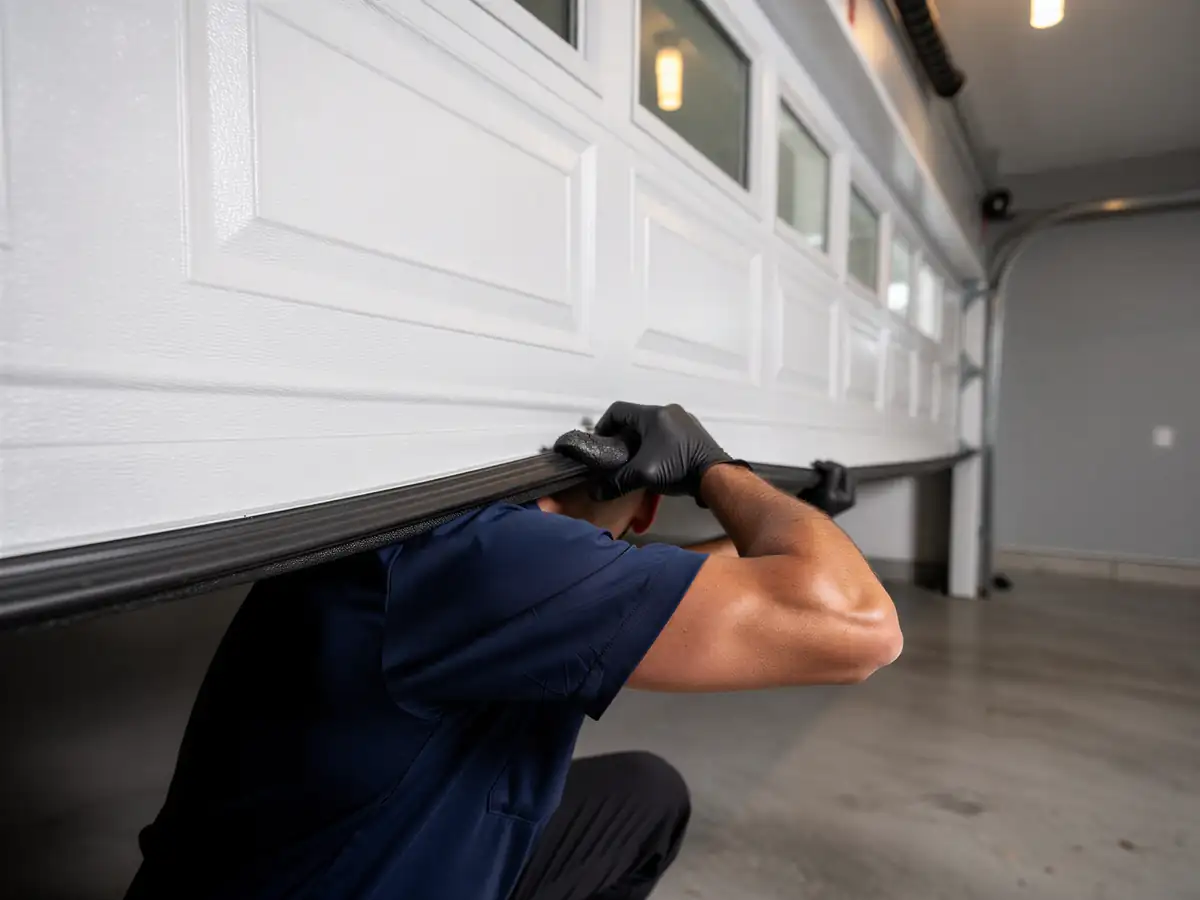
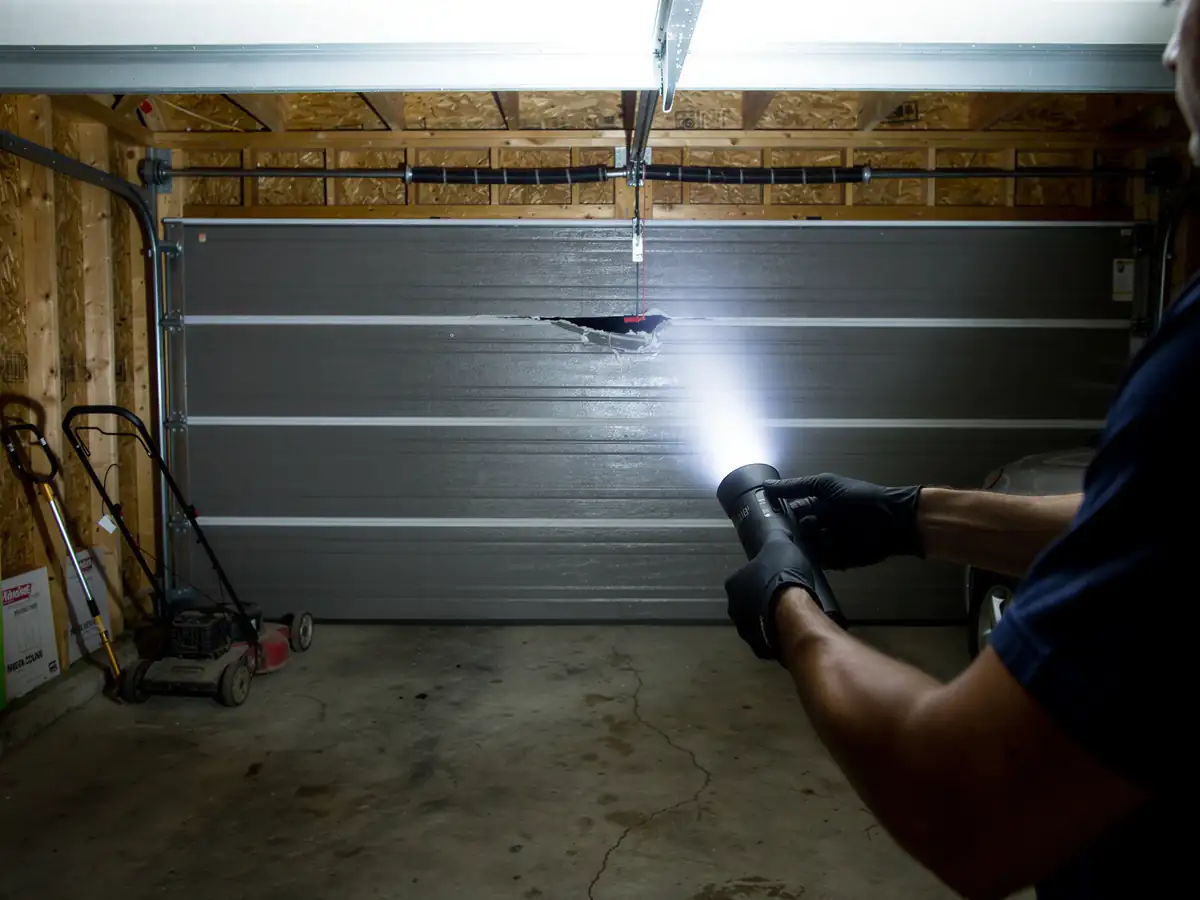
A cable going bad rarely announces itself cleanly. The most common call is a door that's come down crooked - one corner low, binding in the track, sometimes with the bottom panel actually sitting on the floor at an angle. That's one cable still holding while the other has let go or stretched.
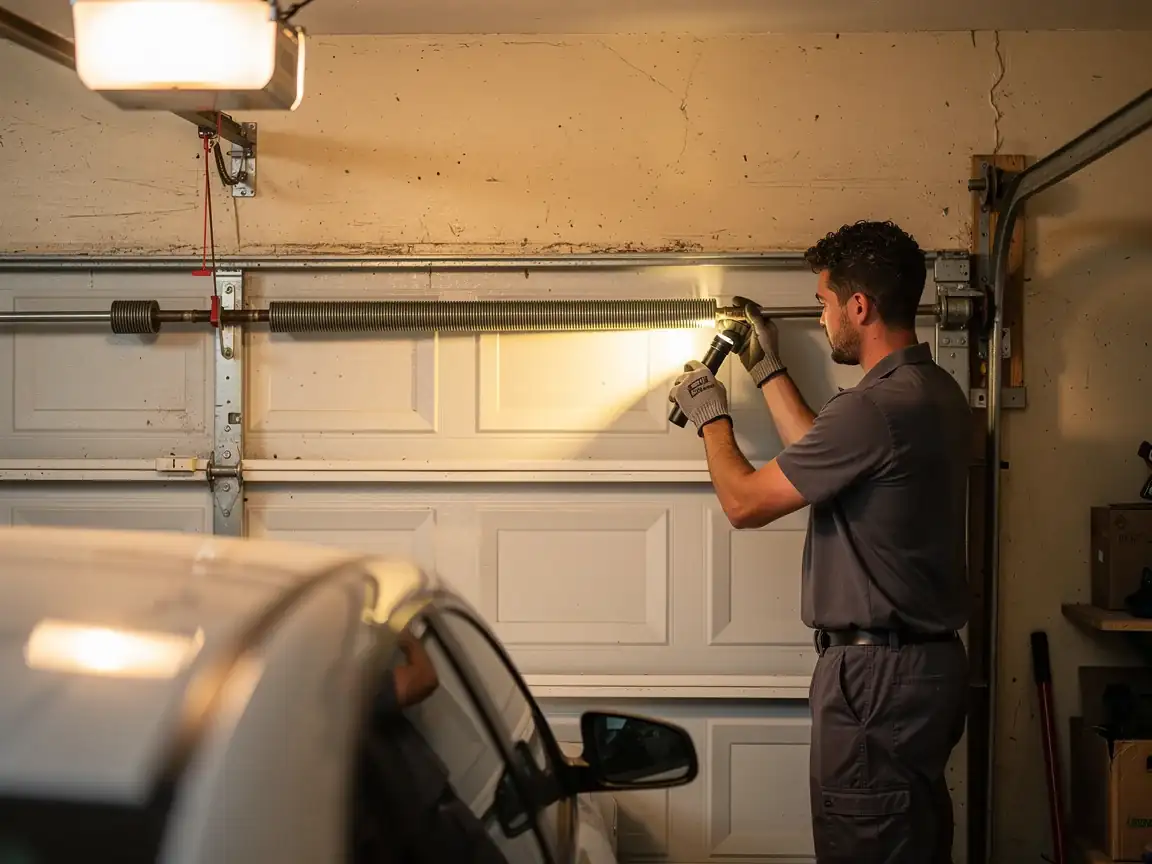
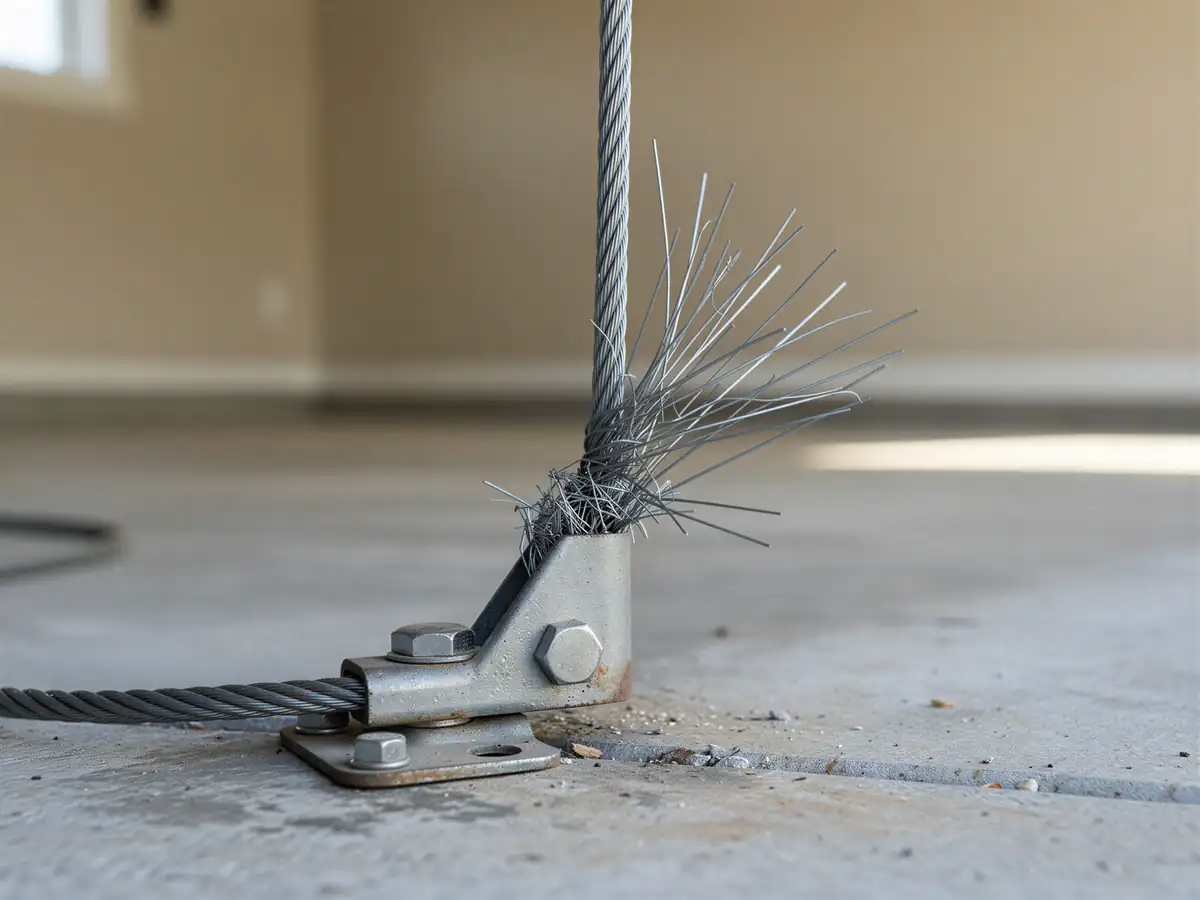
Other owners call because the door simply won't move: the opener runs but the door doesn't lift, which usually means both cables are slack or one has jumped the drum and jammed everything. If you can get close enough to look, frayed strands near the bottom bracket or around the drum are the giveaway - thin wires poking out like a worn broom bristle. Don't pull the release and try to force it by hand at that point; a cable under tension that's about to go can whip, and on a double door with the torsion spring still loaded, that's real risk.
Less dramatic but just as real: a door that's noticeably noisier than it used to be, with a faint clicking or grinding near one top corner as a cable rides unevenly on its drum. That one gets ignored until it isn't.
Time on the Job
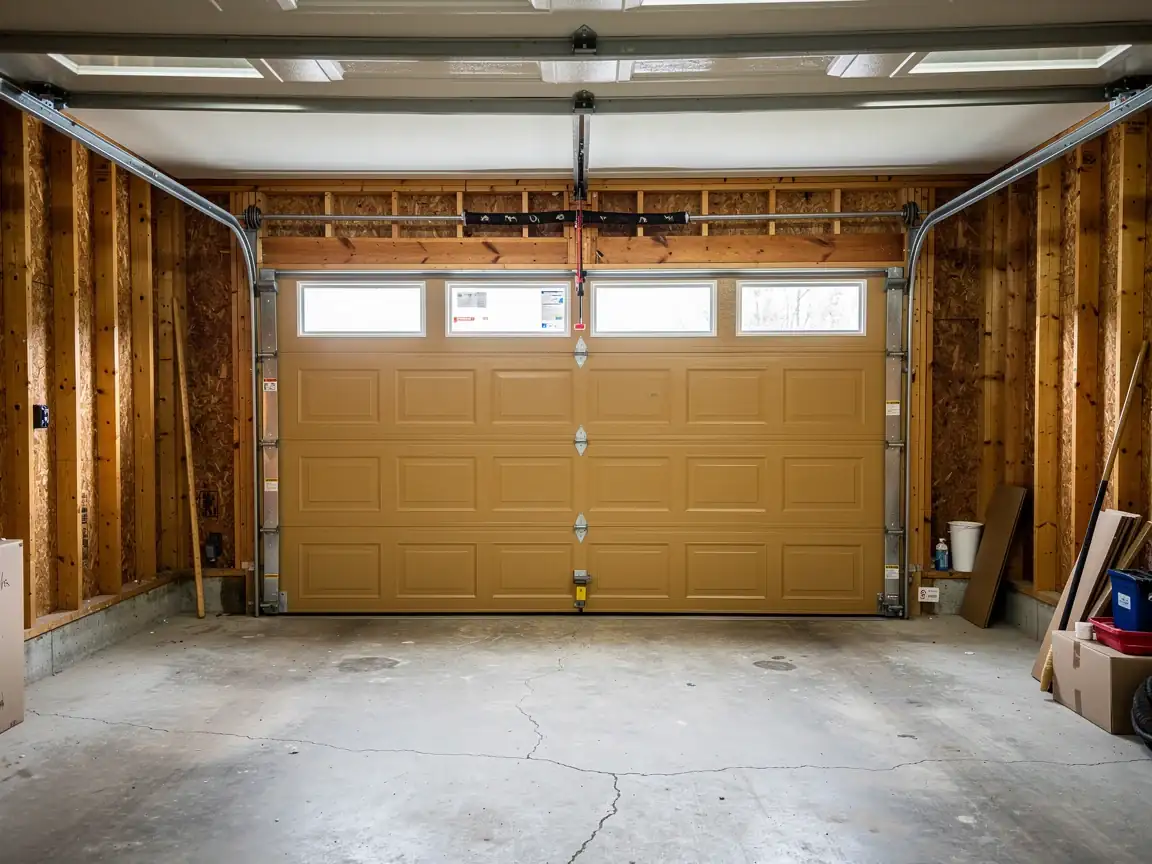
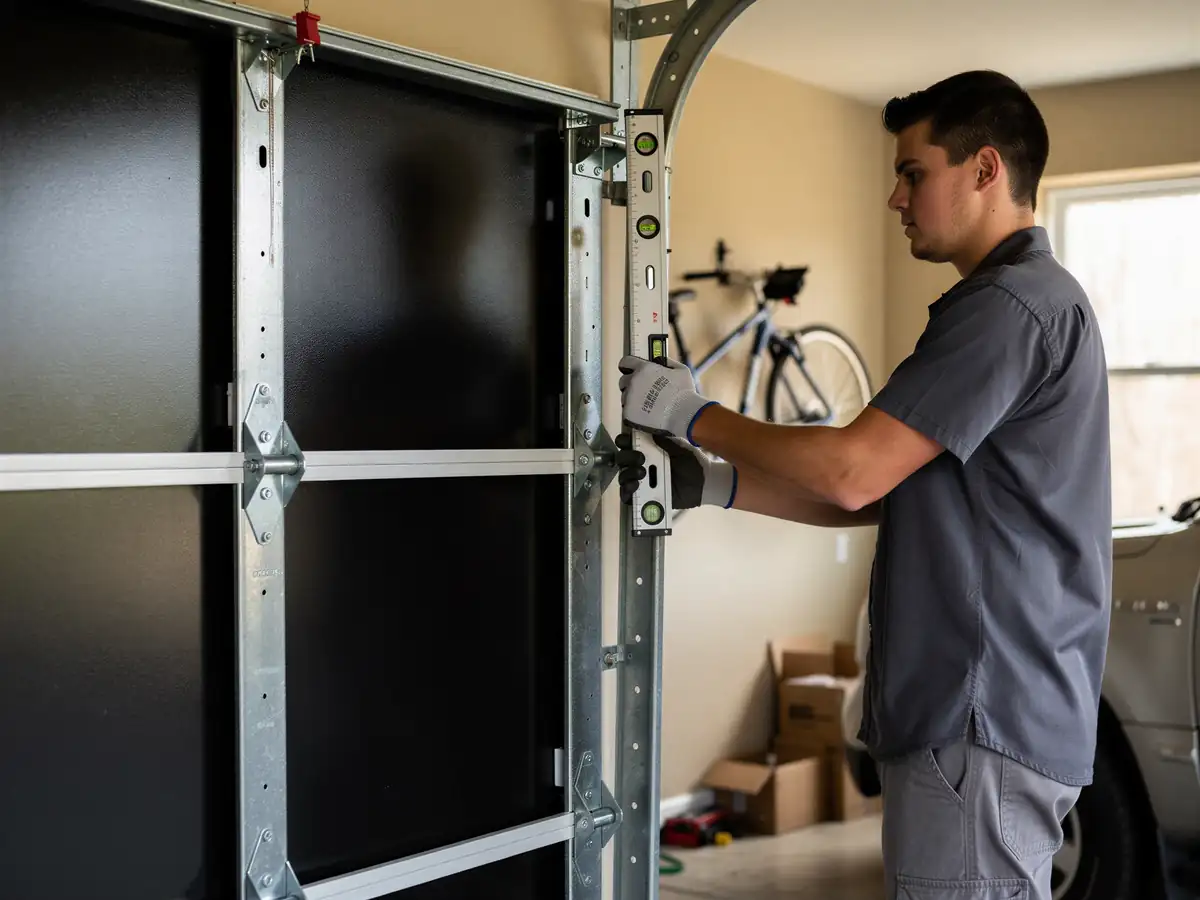
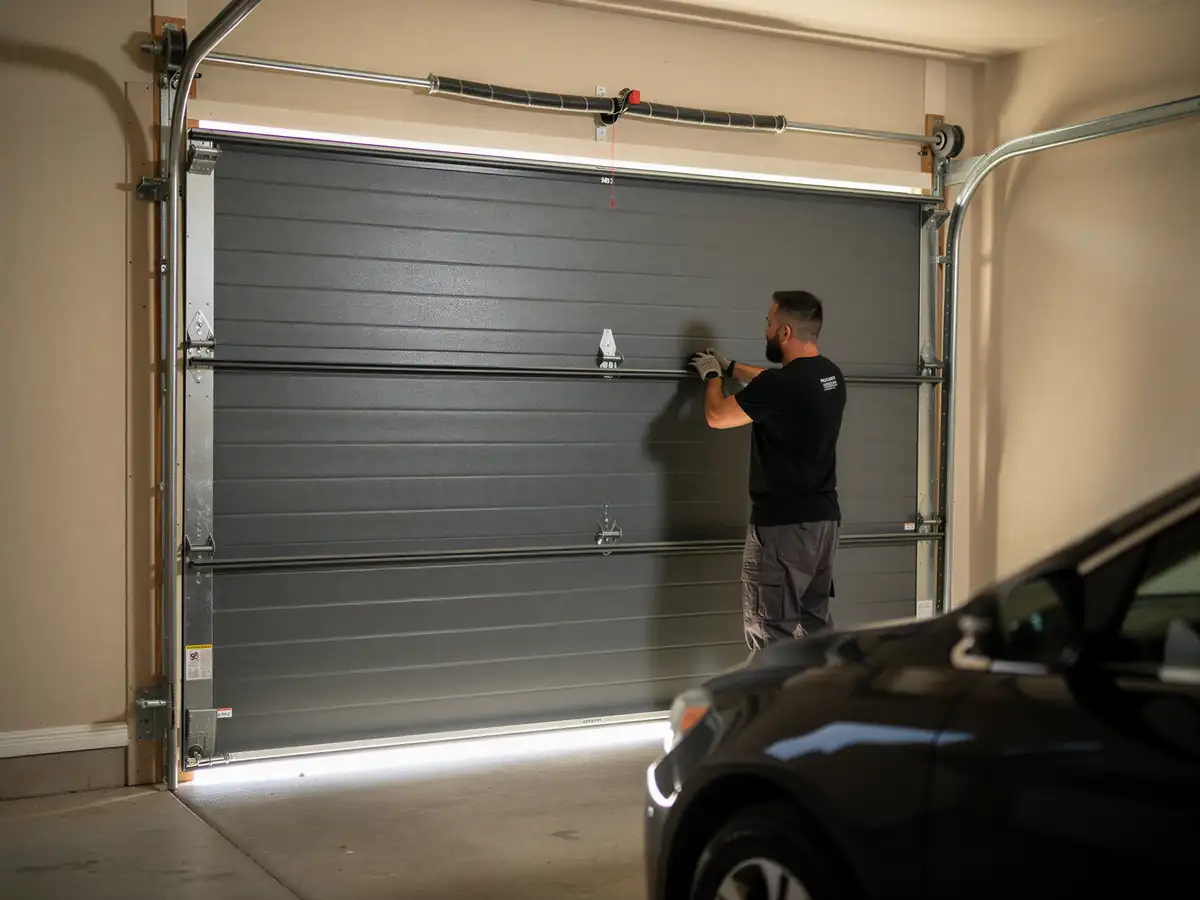
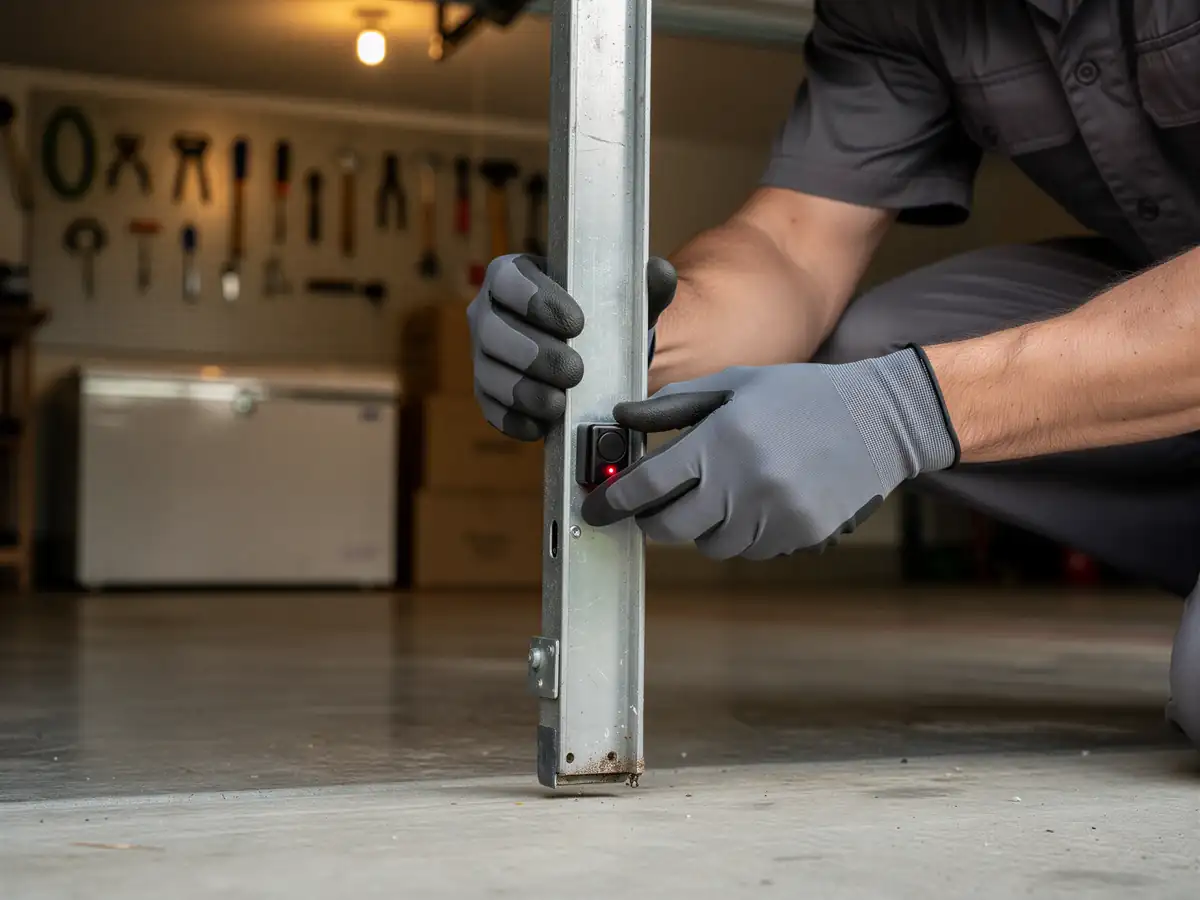
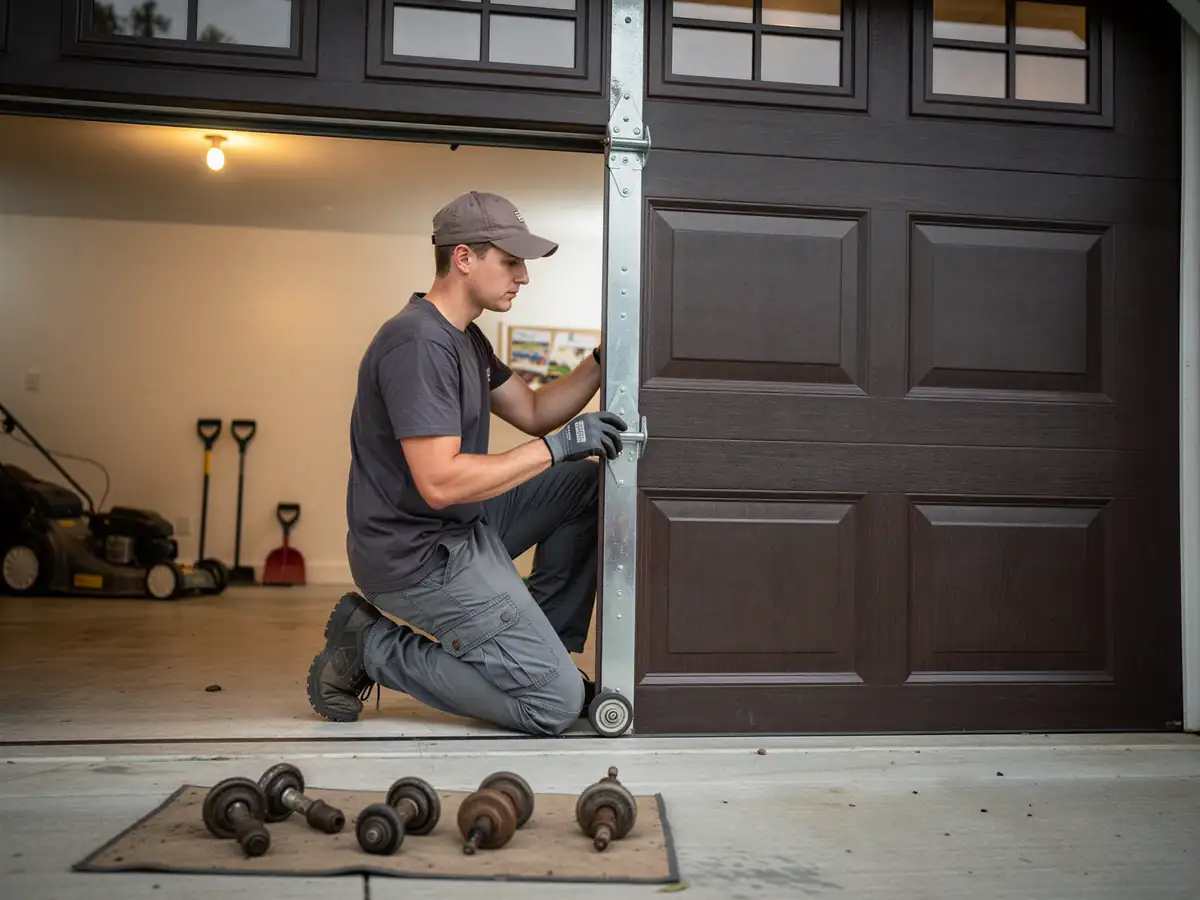
Cable repair is one of the more contained jobs we do. In most cases both cables get replaced together even if only one has failed, since they're the same age and under the same load - replacing one and leaving the other is just scheduling the next call. The work itself is mechanical: release tension safely, pull the old cable, fit the new one to the drum and bottom bracket, and reset tension evenly on both sides so the door tracks straight.
What changes the time on site is what else turns up. A cable that snapped because a roller seized or a track got bent in the same event means we're fixing more than the cable. A door with the original 1970s-era hardware sometimes needs the drum or bottom bracket freed up before the new cable will seat right, since decades of paint and grime don't come off fast. We'd rather tell you that up front than rush it and have the door come back out of track in six months.
One honest limit: if the drum, shaft, or bottom bracket is worn or cracked and not just the cable, that's a separate repair, and we'll say so rather than force a cable onto hardware that's not going to hold it properly.
The Cost of This Job
We're not going to put a number here that doesn't hold up once someone's actually standing in front of your door
Cable repair cost depends on whether it's one cable or the pair, whether the drums and bottom brackets are still sound, and whether the door is a standard single or a heavier double that puts more load on the hardware. A door carrying insulated panels that were added after the house was built often needs different cable sizing than what came stock, and that's the kind of thing we check before quoting, not after.
What we can tell you: this is not a job where going cheap on the part makes sense
A mismatched or undersized cable on a door that's seeing daily use is a repeat call waiting to happen, and on a torsion system under real tension, it's not where you want a shortcut. We quote the job after a look at the actual hardware, not off a phone description, because two doors that sound the same over the phone can need very different work once we're standing at the bracket.