Serving Sunrise, FL & nearby
(954) 459-3860
Sunrise, FL

The Noises Your Sunrise Garage Door Is Trying to Tell You About

Sunrise homes built from the 1960s through the 2000s make specific sounds as original hardware ages in mild, humid air. Here's what to listen for before a spring lets go.

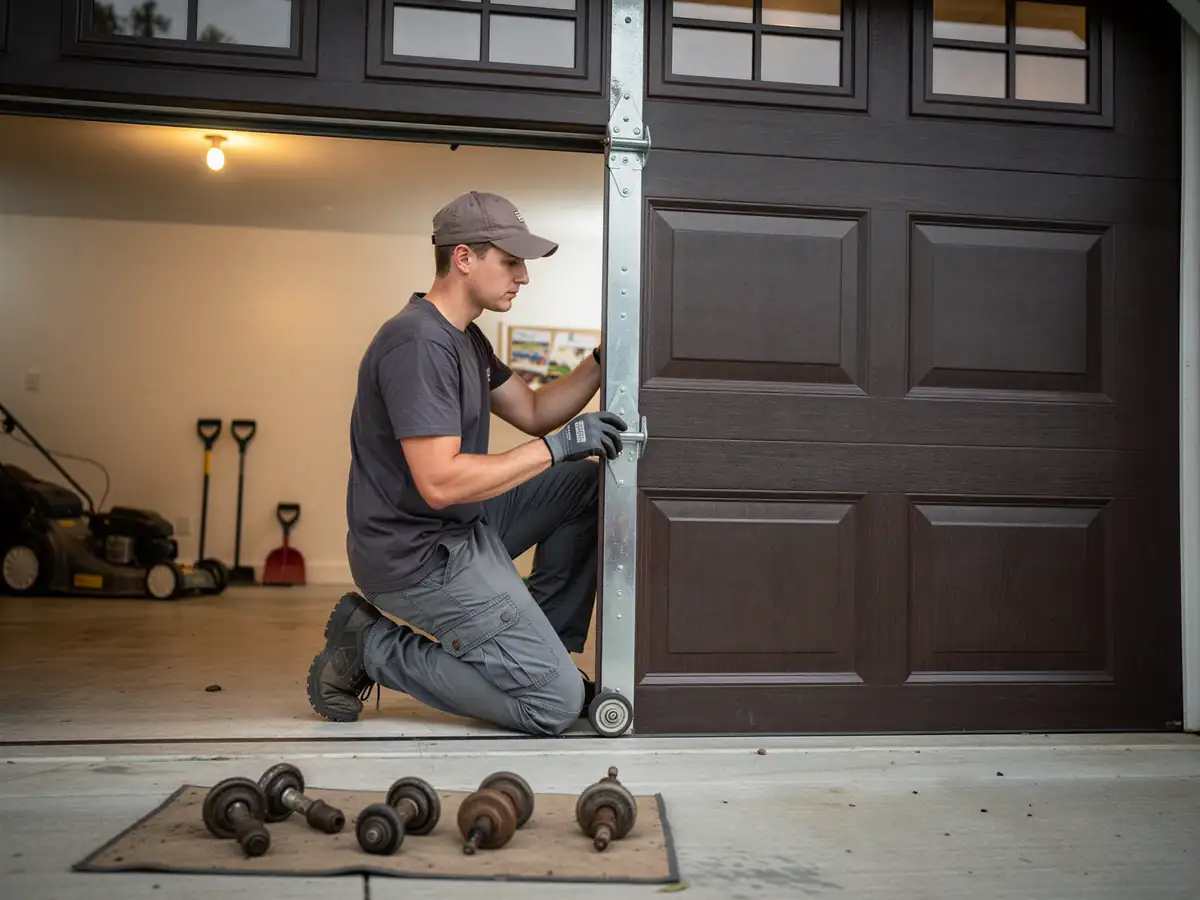
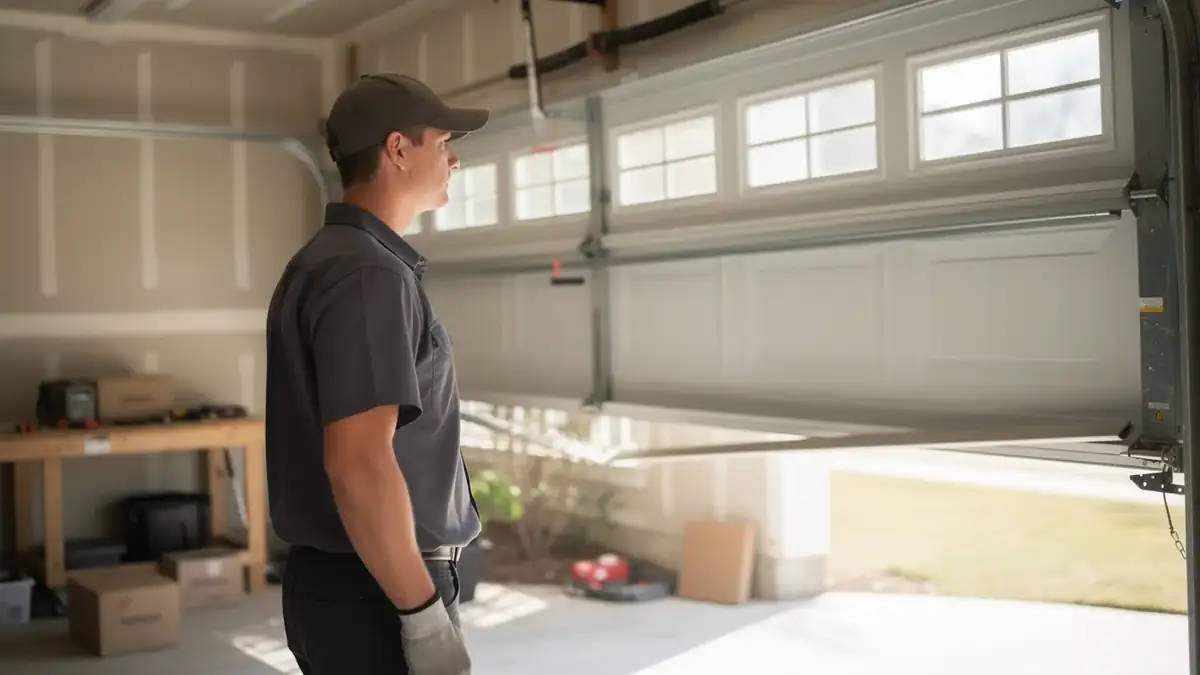
A technician in a gray shirt and cap stands in a garage with an open door.

What to Look At First

A lot of the houses we get called to in Sunrise and the surrounding area - Tamarac, Lauderhill - went up between 1962 and 2005, with the bulk of that stock dating to the 1960s and 70s. That matters because a door built on that timeline is usually on its second or third opener and often its original track and hinges. Start by standing in the garage with the door closed and just running the opener through one full cycle while you watch the springs, not the door itself. A torsion spring that's winding down will show daylight between the coils as it turns, and it'll make a grinding or popping sound right as the door passes the halfway point. That's different from a steady rattle, which is almost always a track bolt or a hinge screw that's worked loose over years of use. If the noise is a single loud bang on the way up or down, stop using the opener and call - that's a cable or a spring giving out, not something to run through a few more times to "see if it settles."

What the Weather Here Does to It

We're in a mild temperate band, not a freeze-thaw climate, so you won't get the hardware snapping from cold contraction the way a door up north would. What you get instead is humidity and salt-tinged air working steadily on anything that isn't sealed, which on a house from the 60s or 70s often means original steel hinges and rollers that were never swapped for sealed-bearing parts. That shows up as a dry squeal on rollers, a low groan from hinges that have surface rust at the pivot, and a track that's gone slightly tacky with corrosion rather than smooth. Because the weather here doesn't put the kind of mechanical stress on springs that freezing temperatures do, when you hear a spring-related noise in this area it's almost always age and cycle count catching up with hardware that's been turning for decades, not a weather event. That's a useful thing to know when you're trying to tell a routine squeak from something about to fail.

The Situation

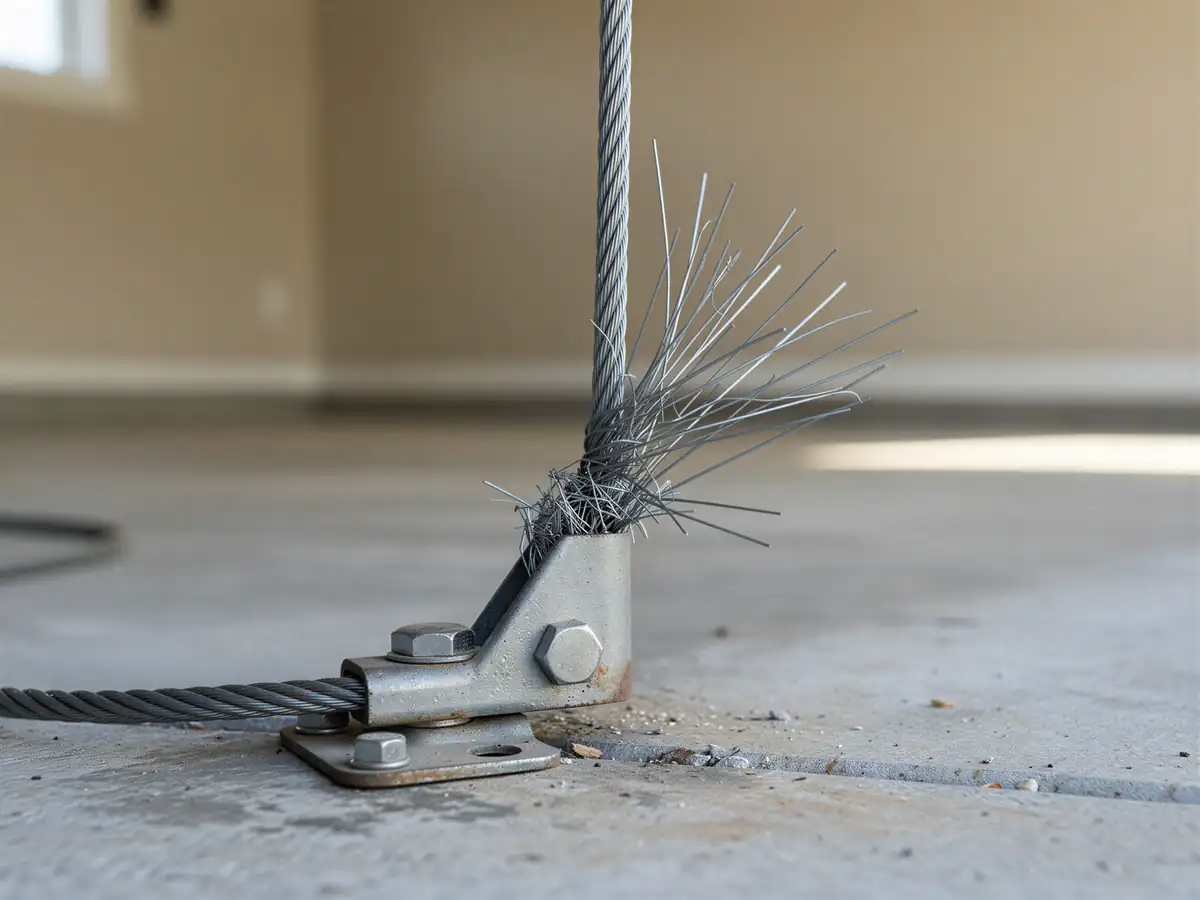
Across the area we work - 76,302 owner-occupied houses out of roughly 300,000 households - a huge share of garages are still running hardware that matches the house's original build era, somewhere in the 1962 to 2005 range with a lot clustering around the mid-70s. That means a noise that sounds minor is frequently a part that's 30 to 50 years into service rather than 5. Rollers and hinges from that era were often plain steel, not nylon or sealed bearing, so a scraping or grinding sound isn't a lubrication problem you can fix with a spray can - it's metal wearing on metal because the part has outlived its design life. A rhythmic thump once per rotation usually means a flat spot on a roller. A metallic ping during travel, especially on an older double door, often means a cable strand starting to fray at the drum. None of that is urgent until it is, and then it's urgent fast.
Doing Nothing For Now

Not every noise needs a truck. A squeak that only shows up on the first open of the day and quiets down after that is usually just stiff hinges warming up - lubricate the pivot points and leave it. A rattle that's louder on windy days is often a loose track bracket, and that's a job for a wrench, not a service call. Where we draw the line: if the noise coincides with the door hesitating, reversing on its own, or feeling heavier to lift by hand than it used to, that's spring fatigue talking, and on a torsion system that's not a DIY fix - the spring is under enough tension to cause real injury. We also won't tell you a 1970s-era door with original hardware just needs "a little grease" if what it actually needs is a hinge and roller replacement; that's a case where patching it costs more over two years than doing it right once.

How it works

From “it’s stuck” to “it’s fixed”

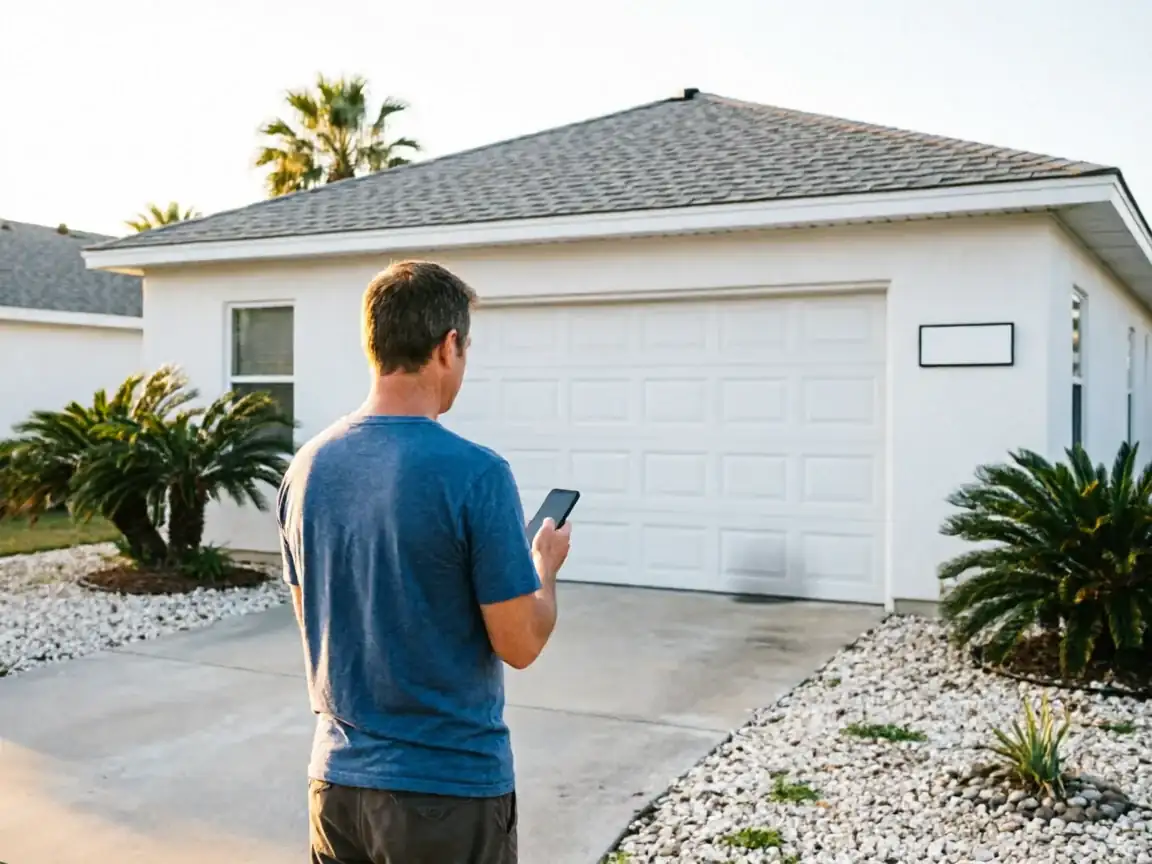
A man stands in a driveway looking at his phone in front of a white garage door.

Tell us what’s wrong

Describe the symptom - won’t open, loud bang, opener runs but the door won’t move.

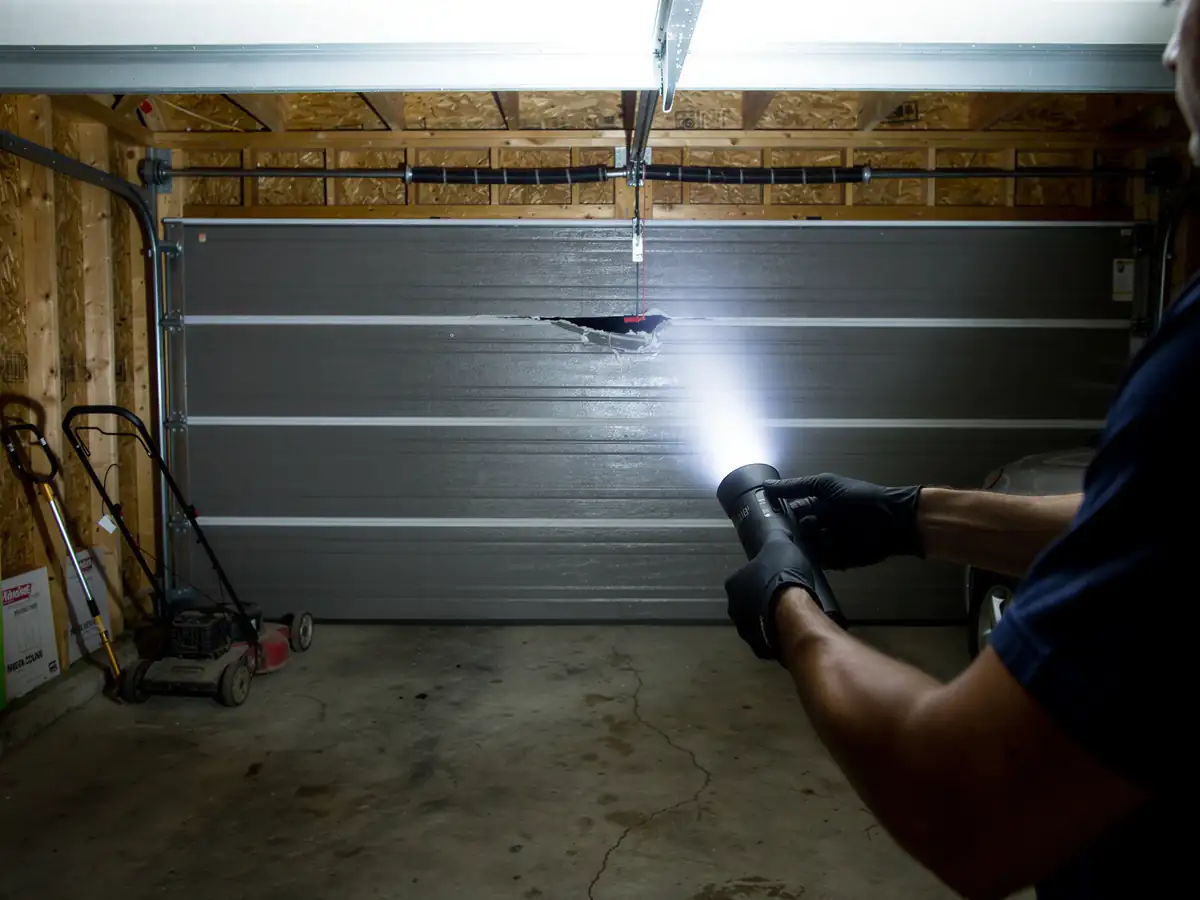
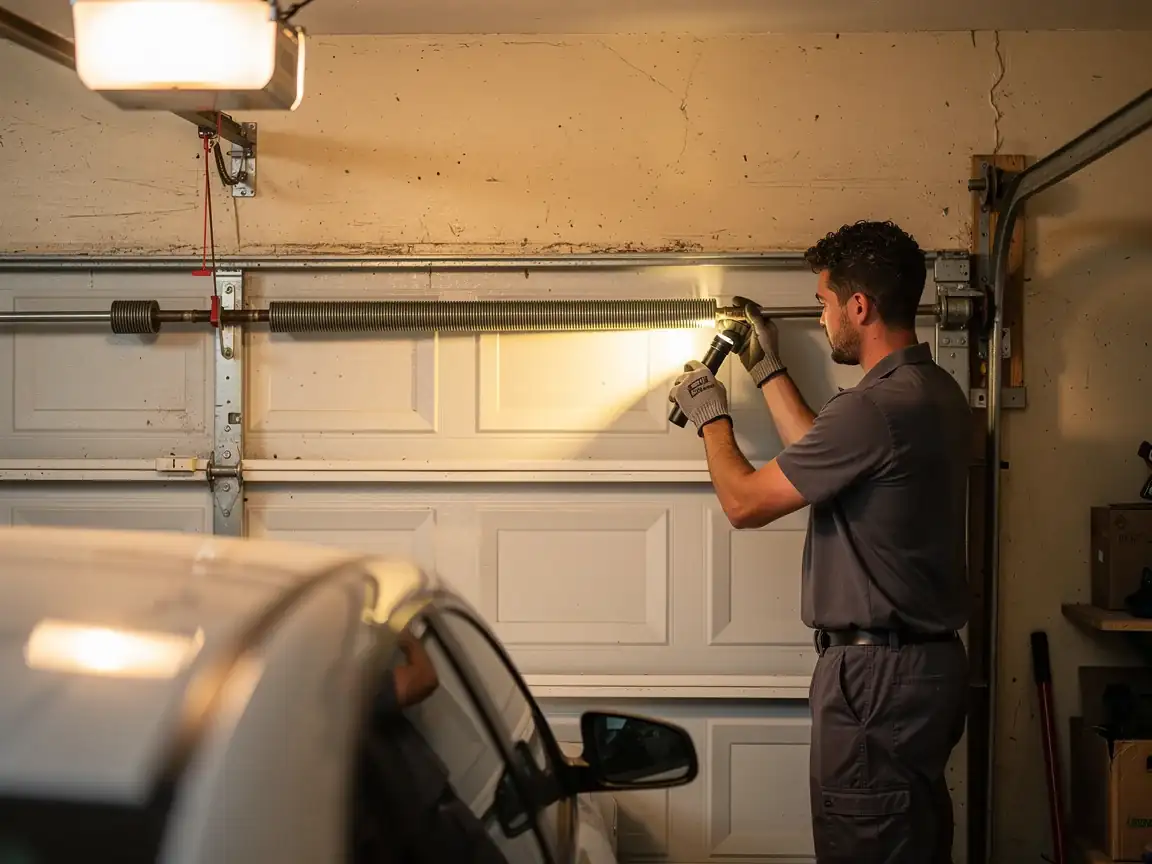
A technician inspects a garage door torsion spring with a flashlight.

On-site diagnosis

A technician tests the door under power and by hand and finds what actually failed.

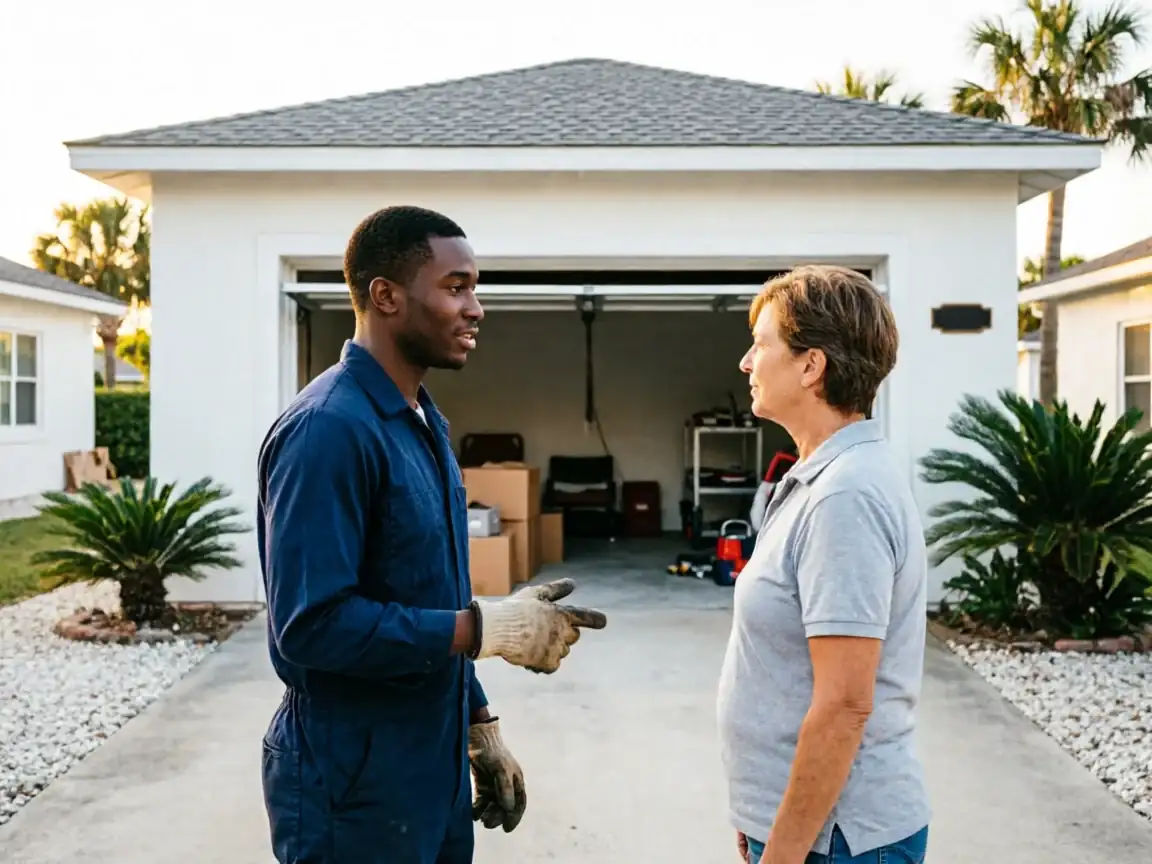
A technician in a blue jumpsuit talks to a woman in front of a garage.

Clear, up-front plan

You get the fix that’s needed and what drives the cost - before any work starts.

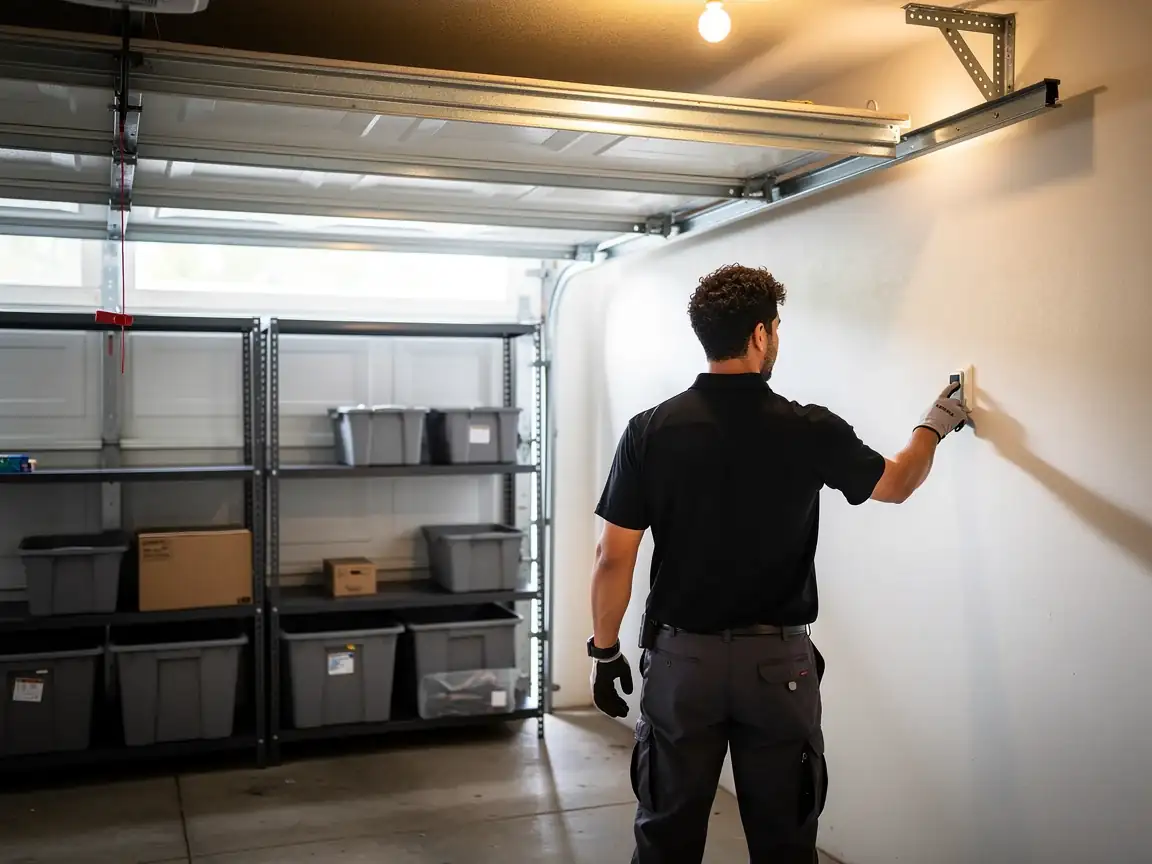
A technician in a black shirt and gloves adjusts a white wall control.

Repaired & tested

The repair is done, the door is set true and tested, and the work area left clean.

Not sure which repair your door needs in Sunrise, FL? Describe what it’s doing - every job starts with a diagnosis.

How we work

What to expect

Diagnosis firstEvery visit starts by finding what actually failed - not a pre-written parts list.
The right part for the doorSprings and openers matched to the door’s weight and age, so the fix holds up.
Straight answersWhen a repair makes more sense than a replacement - or the reverse - you hear it plainly.
Clean, careful workTension released safely, hardware set true, the door tested under power before we leave.
What we do

Garage Door Services

Repair and installation work for Sunrise homes and businesses.

Questions

Frequently asked

Straight answers about garage door repair in Sunrise. Still unsure? Ask us directly.

My garage door in Sunrise makes a loud bang once and then opens fine - do I need to worry?

Yes. A single loud bang during travel is a classic sign of a cable slipping or a spring component shifting, not something resolving itself. On older hardware common in this area's 1960s-70s housing stock, that bang is often the last warning before a full break. Stop using the opener and have it looked at before the next cycle.

Why does my door squeal more in humid weather here than it used to?

Our mild, humid climate works steadily on unsealed steel hinges and rollers, which is what a lot of original hardware from the area's 1962-2005 building era used. The moisture doesn't freeze or stress the metal the way cold climates do - it just corrodes the pivot points over years, which shows up as a dry squeal that grease only masks temporarily.

Is a rattling track dangerous or just annoying?

Usually just annoying. A rattle tied to wind or vibration is most often a loose bracket or bolt along the track, which you can often tighten yourself. It becomes a bigger concern only if the rattle is paired with the door binding, catching, or traveling unevenly, which points to a bent track instead.

Ready to get your garage door sorted?

Tell us what it’s doing and where you are in Sunrise - we’ll take it from there.

Request a QuoteCall