What to Look At First
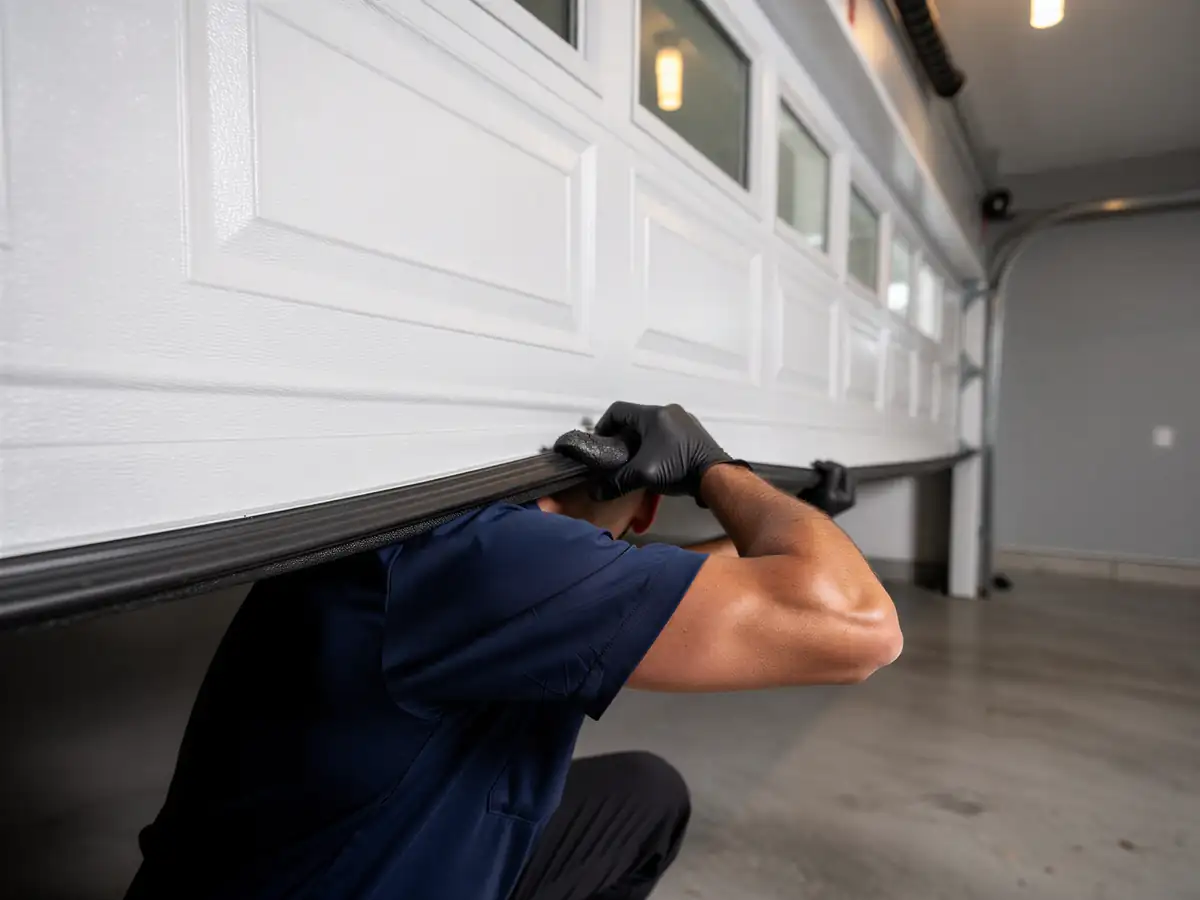
Start at the bottom seal, not the opener
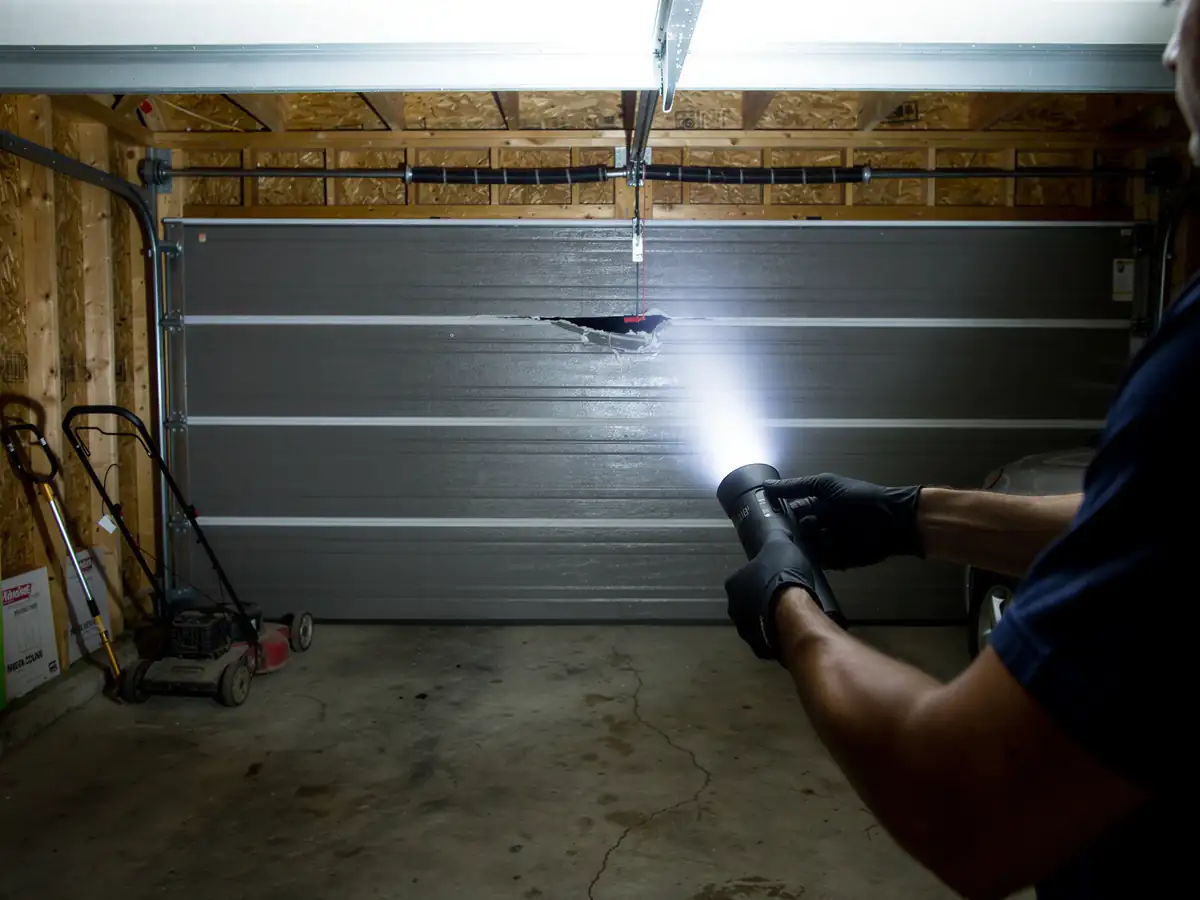
Most of the garage doors standing in this service area went up somewhere between 1962 and 2005, with the median build landing around 1976. That matters because the seal channel on a door from that stretch is usually the narrower profile - built for a thinner vinyl bulb than what gets sold today. If you've got daylight showing under the bottom corners, or you can feel moving air along the bottom edge when the AC kicks on, that's the original-spec channel letting a modern thicker seal sit proud instead of flush.
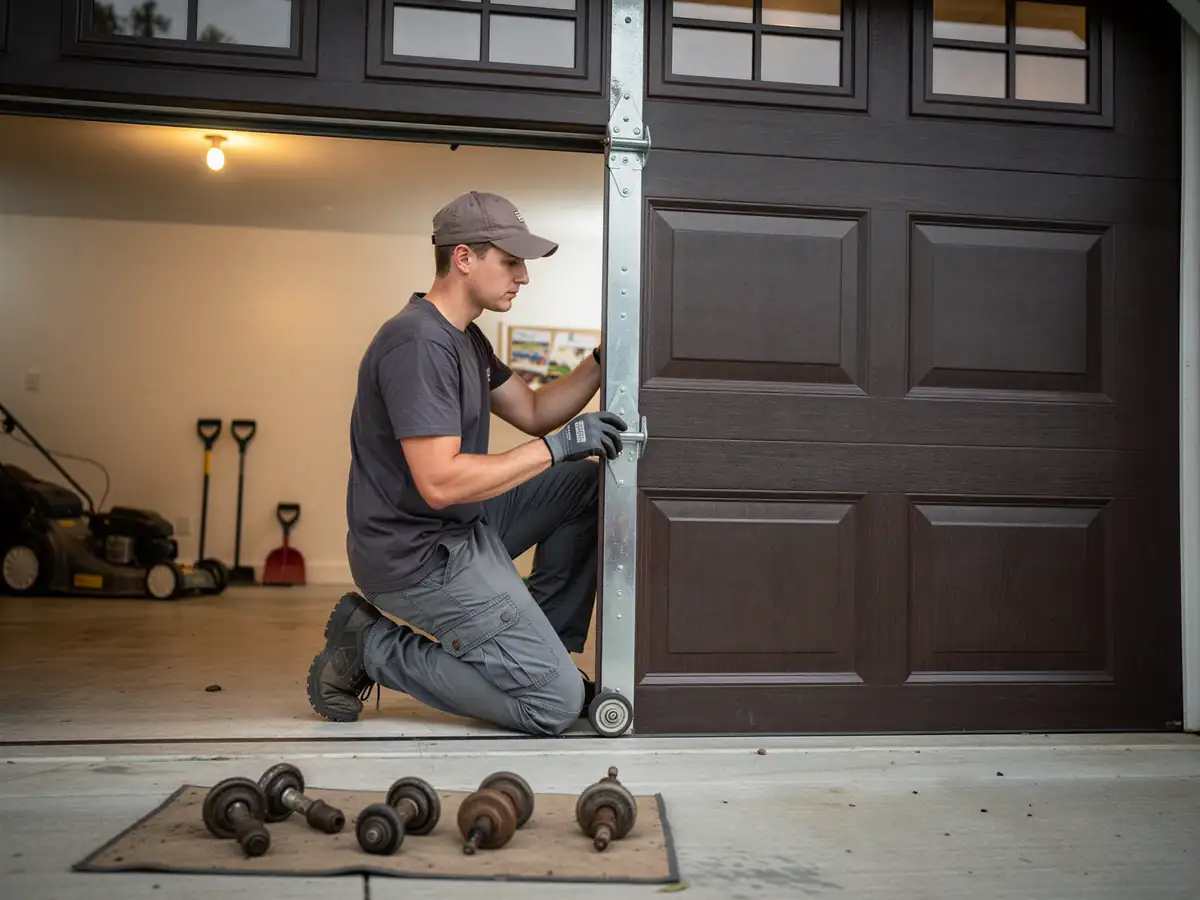
Check the side seals next, where the door meets the jamb
On the 1960s and 70s stock that makes up a lot of the housing here, that strip is often stapled or nailed rather than screwed into a track, and it curls at the corners first. Run your hand down both sides with the door closed. If one side flaps when a car drives past outside, that's your draught, not a mystery leak somewhere else in the garage.
Last, look at the top seal where the panel meets the header
It's the one owners forget, and on older frames it's usually the thinnest material in the whole assembly.
What the Weather Here Does to It
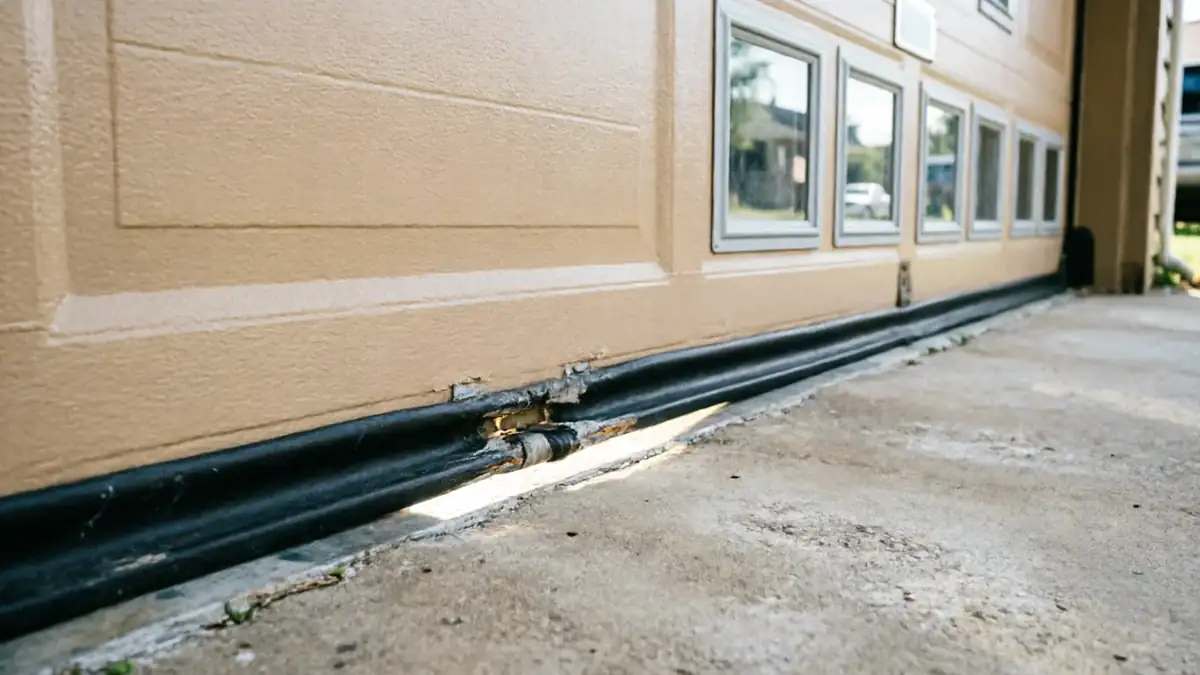
This is a mild temperate climate band - no freeze-thaw cycle breaking seals apart the way it would further north. That's the good news. The bad news is that rubber and vinyl here don't fail by cracking in the cold, they fail by going soft, then tacky, then gummy from steady UV and humidity cycling day after day. A seal that would last a decade in a dry cold climate can turn to mush in six or seven years here because it never gets a break from heat and moisture to firm back up.
That changes the math on when to replace. In a cold climate you're watching for a seal that's cracked and brittle. Here you're watching for one that's gone spongy, lost its shape, or started pulling away from its track because the adhesive or staple backing softened along with the material around it. On a 1962-2005 door, that track is often original, so a seal swap sometimes needs a new retaining strip too, not just a new bulb pressed into the old one.
None of this is dramatic weather. It's just steady, and steady wins over time.
The Situation
Across the 25 named areas that make up this market, the housing stock repeats itself - mostly 1960s and 70s construction, with newer infill mixed in up through the early 2000s. That means two different seal problems exist side by side on the same street: the older steel panel door with a narrow factory channel, and the later door with a wider aftermarket-style seal groove that takes modern parts without a fight.
With 76,302 owner-occupied houses across this service area and a median household income of $63,423, most owners aren't looking to replace a whole door over a draught. They're looking to know whether a seal kit fixes it or whether the door's past that. For the bulk of the 1962-2005 stock here, a seal kit plus a track shim where needed does the job - the panel and hardware underneath are usually still sound even when the seal around them has given up.
From Tamarac and Lauderhill two miles out to just east of here, the same mid-century door stock shows up block after block. If your neighbor two miles over just dealt with the same soft, gummy bottom seal, that's not a coincidence - it's the same houses, the same era, the same climate doing the same slow work on all of them.
Doing Nothing For Now
If the draught is minor and the door still opens, closes, and seats square, it's fair to leave it a season and watch it rather than call it an emergency
A soft seal that's not yet torn or pulled loose isn't going to fail overnight.
Here's the honest limit
Though: once a bottom seal has pulled away from its retaining track along more than a short stretch, or the side seal has curled enough that you can see a gap with the door shut, a patch job doesn't hold. We don't glue a seal back onto a track that's already lost its grip - it comes loose again within weeks and you're back where you started. At that point the fix is a new retainer and seal together, not a shortcut.
Waiting doesn't cost you the door
It mostly costs you a slightly higher utility bill and a bit more dust blowing in under that edge. If you're not noticing water getting in or the door dragging on the seal when it moves, there's no rush. Just don't let a torn seal sit through a wet stretch and assume it'll seal itself back down - it won't.