What the Weather Here Does to It
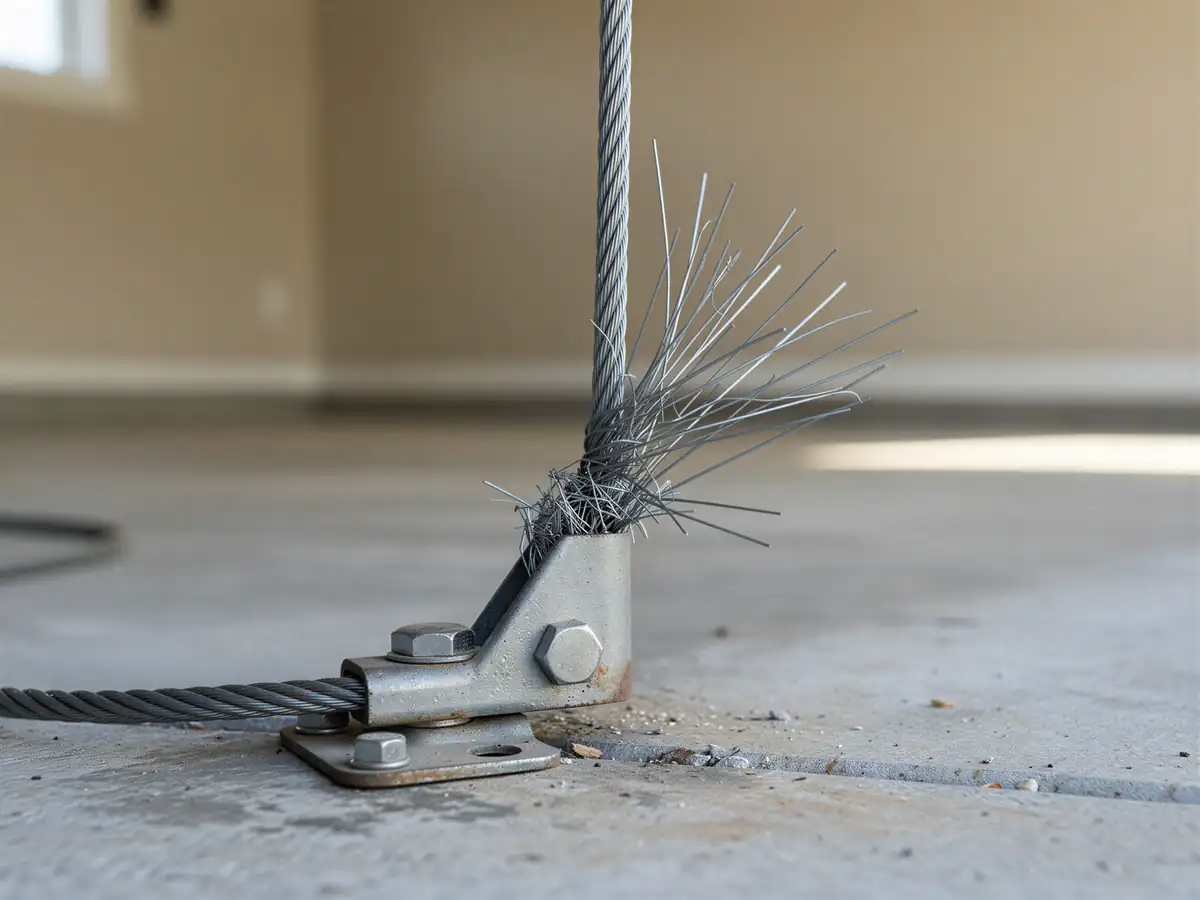
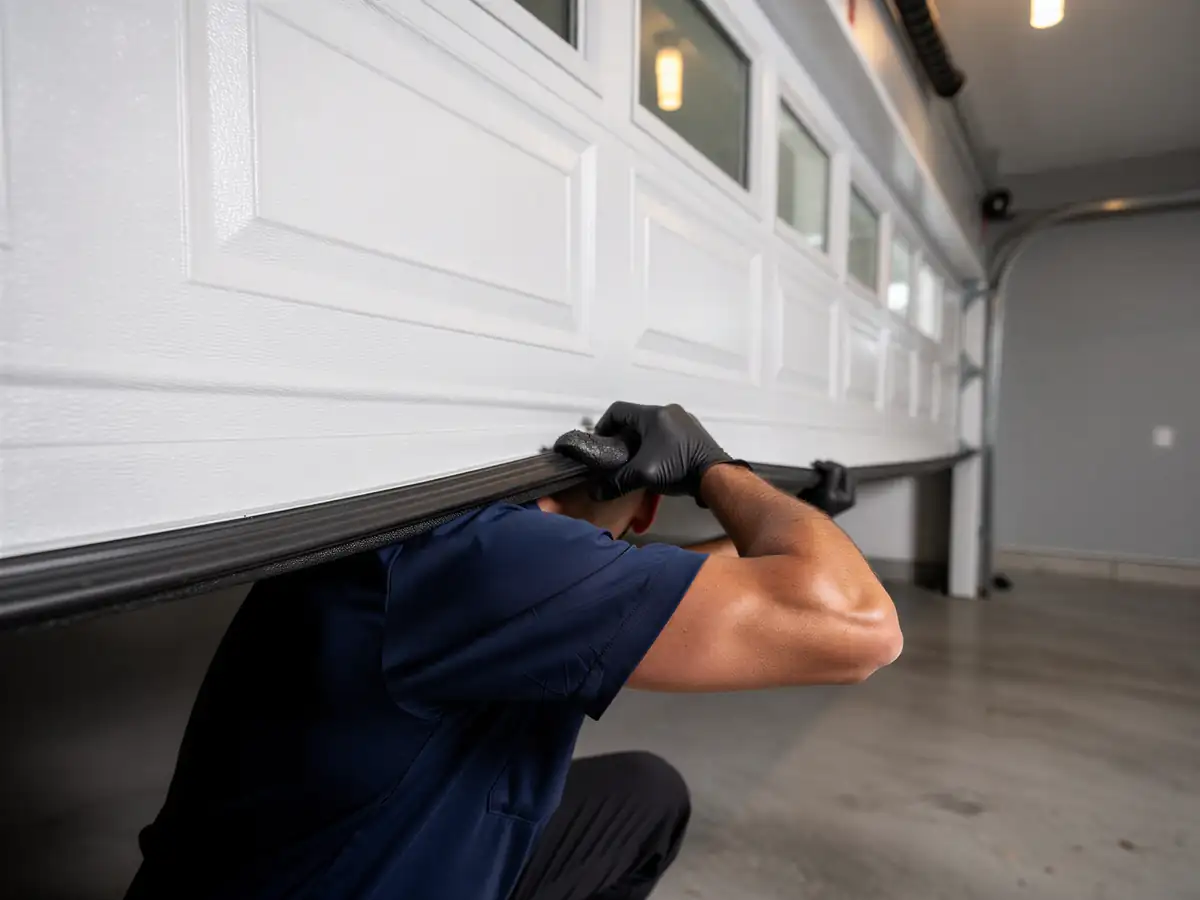
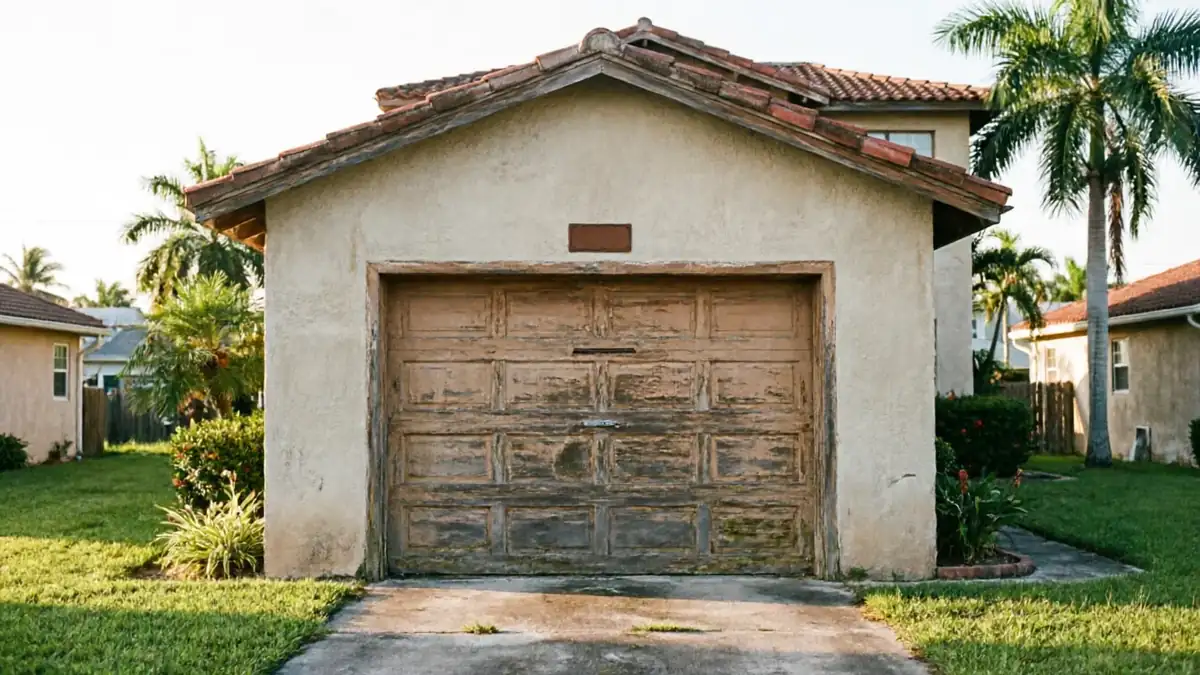
Sunrise sits in a mild temperate band, which cuts both ways for an older door. You don't get the deep freeze-thaw cycles that crack track brackets or seize springs solid overnight, so a lot of original 1970s hardware here has simply outlasted equivalent doors up north - not because it's better built, but because it was never asked to survive ice. What you do get is steady, year-round wear: lubricant drying out faster in sustained heat, rubber weatherseals going brittle and cracking at the bottom panel, and galvanized hardware slowly losing its coating from humidity cycling rather than any single storm. None of that is dramatic, which is exactly why it gets ignored until a cable snaps or a hinge finally shears. On an older door, that steady wear is usually the actual cause of failure, not a sudden event. If you're checking an older door before deciding whether to fix it, look at the weatherseal and the galvanized coating on the hinges and track first - those are the parts the mild climate here quietly eats over decades, even when nothing ever froze or flooded.
The Situation
The area this shop covers includes 300,344 households, with 76,302 of those owning rather than renting, and a median household income of $63,423. That's not a household budget that absorbs a full door-and-opener replacement without thinking it over, and a lot of owners here are right to ask whether a repair gets them another decade out of a door instead. The honest answer depends on what's actually broken. A spring, a cable, a bent roller track, a worn opener - those are repairs on almost any door from the 1962-2005 era, and they're the cheaper path. A warped slab, a frame that's shifted out of square, or an opener that's been jury-rigged onto a door it was never sized for - those are the cases where putting more money into the old door just delays a replacement you're going to pay for anyway, at a higher total cost than if you'd done it once. The same mix of eras shows up out toward two miles east, and down toward Lauderdale Lakes, four miles south - same housing stock, same decision every few years.